Great Philosophers and Thinkers: Lives, Ideas, and Philosophies
Explore the lives, philosophies, ideas, and major works of influential
philosophers and thinkers throughout history, from Socrates, Plato,
and Aristotle to modern and contemporary philosophy. Discover their
contributions to ethics, metaphysics, epistemology, logic, politics,
aesthetics, science, and the philosophy of mind.
Why Do These People Matter?
Every idea explored on this site — every
book, every
branch of philosophy, and every
school of thought — traces back to
someone who dared to ask a question no one had asked before. From
the thinkers of Ancient Greece to philosophers across India, China,
the Islamic world, and modern Europe, these are the philosophers
whose questions, arguments, and ideas continue to shape how we
understand ourselves and the world today.
Behind every great civilization, scientific breakthrough, political
revolution, and moral debate lies the influence of philosophical
thought. Philosophers did more than write books—they challenged
traditions, questioned authority, and encouraged humanity to think
beyond accepted beliefs. Their ideas continue to shape how we
understand ourselves, our societies, and the world around us.
The individuals gathered on this website come from diverse cultures
and distant historical periods, yet they share a common pursuit: the
search for wisdom, truth, and an understanding of the world and
ourselves. Their questions have traveled across centuries, surviving
the societies in which they were first asked. They remind us that
philosophy is not merely a record of ideas from the past, but a
living discipline — one that continues to question our assumptions,
expand our understanding, and invite us to think more deeply.
🏛 Ancient Greek Philosophers
🌊 Thales of Miletus
Lived c. 624 BC – c. 546
BC
Thales (Θαλῆς), is widely regarded as the first philosopher in
the Western tradition. Rather than explaining nature through
mythology, he searched for natural causes and believed that
water was the fundamental substance of the universe.
Major Contributions
Founder of Western Philosophy
Natural Philosophy
Scientific Observation
Geometry and Astronomy
"Water is the principle of all things."
— Thales of Miletus
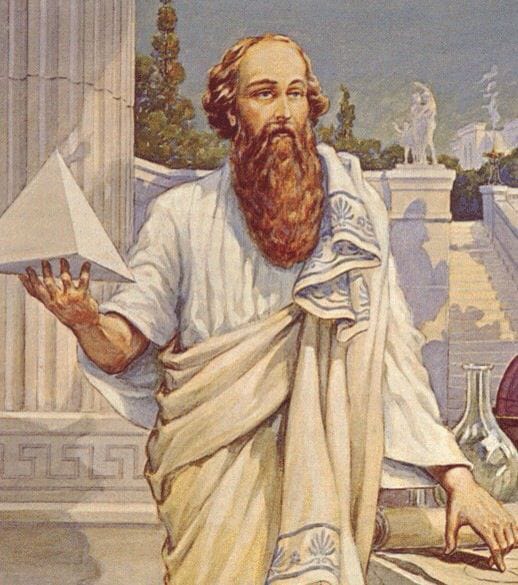
🔺 Pythagoras
Lived c. 570 BC – c. 495
BC
Pythagoras of Samos (Πυθαγόρας), was a pre-Socratic
philosopher and mathematician who founded Pythagoreanism, a
movement that deeply influenced Plato and Aristotle. He is
credited with being the first person to call himself a
philosopher ("lover of wisdom") and established a secretive,
ascetic school in Croton, Italy. His philosophical
contributions centered on the belief that numbers are the
fundamental essence of reality, providing order and harmony to
the cosmos and the soul. Key tenets included the immortality
and transmigration of souls (metempsychosis), ethical
vegetarianism, and the integration of mathematical study with
spiritual purification
Major Contributions
Pythagorean Theorem
Mathematics
Harmony of the Universe
Pythagorean School
"Number is the ruler of forms and ideas."
— Pythagoras
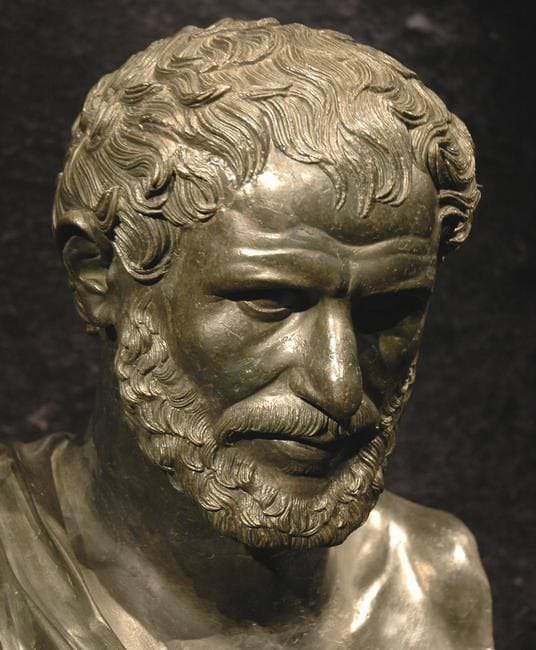
🔥 Heraclitus
Lived c. 540 BC – c. 480
BC
Heraclitus (Ἡράκλειτος,Hērákleitos), of Ephesus was a
Pre-Socratic Greek philosopher renowned for his doctrines of
universal flux and the unity of opposites. He is famously
encapsulated by the aphorism that "no man ever steps in the
same river twice," illustrating his belief that reality is in
a constant state of change.
Major Contributions
Doctrine of Change
Unity of Opposites
Concept of the Logos
Natural Philosophy
"No man ever steps in the same river twice."
— Heraclitus
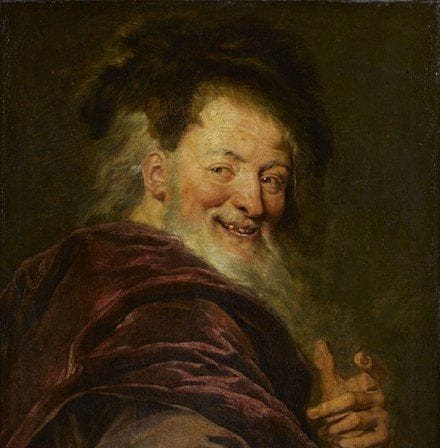
⚛ Democritus
Lived c. 460 BC – c. 370
BC
Democritus (Δημόκριτος, Dēmókritos), known as the "Laughing
Philosopher" for his emphasis on cheerfulness (euthymia), was
a pre-Socratic Greek philosopher from Abdera who, along with
his teacher Leucippus, founded the school of atomism. He
proposed that the universe consists of indivisible particles
called atoms moving through an infinite void, establishing a
materialist framework where all natural phenomena result from
atomic collisions and arrangements rather than divine
intervention
Major Contributions
Atomism
Materialism
Natural Science
Scientific Philosophy
"Nothing exists except atoms and empty space."
— Democritus
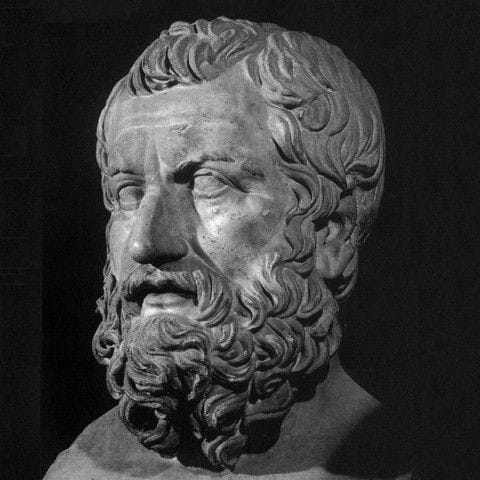
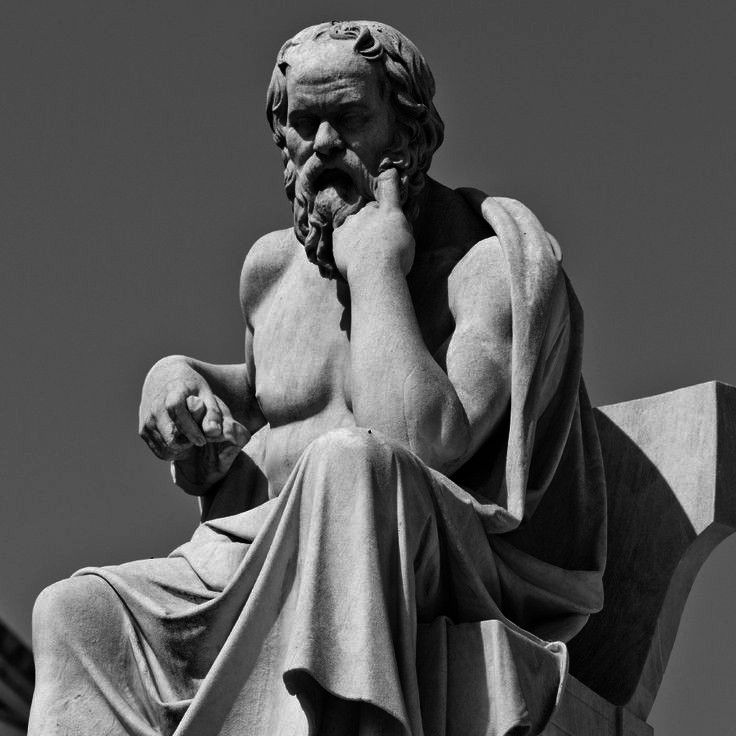
Socrates
Lived c. 470 BC – c. 399
BC
Socrates (Σωκράτης,Sōkrátēswas), an ancient Greek philosopher
from Classical Athens, perhaps the first Western moral
philosopher, and a major inspiration on his student Plato, who
largely founded the tradition of Western philosophy.An
enigmatic figure, Socrates authored no texts and is known
mainly through the posthumous accounts of classical writers,
particularly his students Plato and Xenophon. These accounts
are written as dialogues, in which Socrates and his
interlocutors examine a subject in the style of question and
answer; they gave rise to the Socratic dialogue literary
genre.
Major Contributions
Socratic Method
Critical Thinking
Ethics
Self-Examination
"The unexamined life is not worth living."
— Socrates
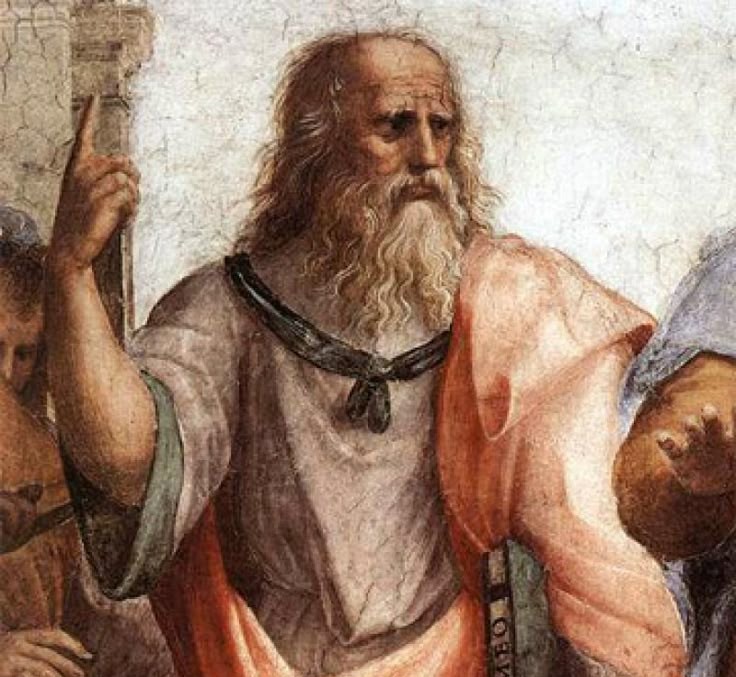
Plato
Lived c. 428 BC – c. 347
BC
Plato (Πλάτων, Plátōn), was an ancient Greek philosopher of
Classical Athens who is most commonly considered the
foundational thinker of the Western philosophical tradition.
An innovator of the literary dialogue and dialectic forms,
Plato influenced all the major areas of theoretical philosophy
and practical philosophy, and was the founder of the Academy,
a philosophical school in Athens where Plato taught the
collection of philosophical theories that would later become
known as Platonism. Plato is a central figure in the history
of Western philosophy. 2,400 years later, Plato's complete
works are believed to have survived—unlike those of nearly all
of his contemporaries.
Major Contributions
The Republic
Theory of Forms
Ideal State
Education
"Knowledge is the food of the soul."
— Plato
Aristotle
Lived 384 BC – 322 BC
Aristotle (Aristotélēs ,Ἀριστοτέλης), was an ancient Greek
philosopher and polymath. His writings span the natural
sciences, philosophy, linguistics, economics, politics,
psychology, and the arts. As the founder of the Peripatetic
school of philosophy in the Lyceum in Athens, he began the
wider Aristotelian tradition that followed, which set the
groundwork for the development of modern science Shortly after
Plato died, Aristotle left Athens and, at the request of
Philip II of Macedon, tutored his son Alexander the Great
beginning in 343 BC. He established a library in the Lyceum,
which helped him to produce many of his hundreds of books on
papyrus scrolls
Major Contributions
Formal Logic
Virtue Ethics
Biology
Scientific Observation
"Knowing yourself is the beginning of all wisdom."
— Aristotle
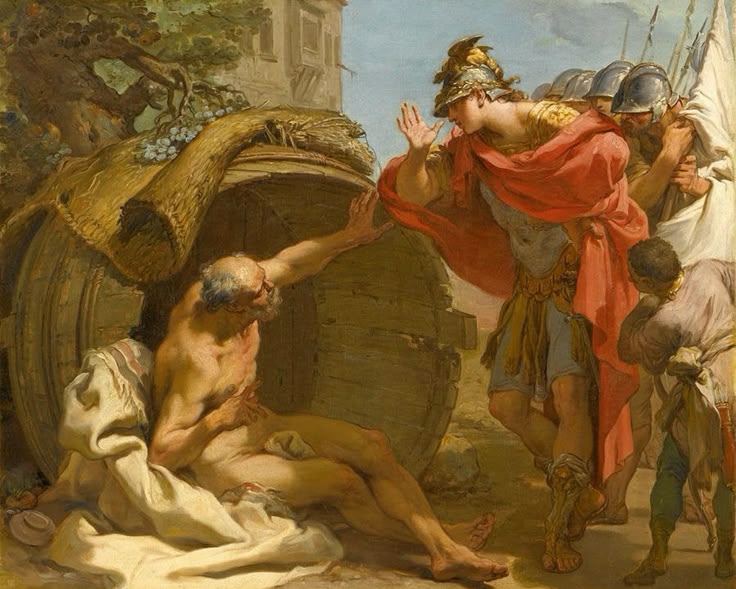
🛢 Diogenes of Sinope
Lived c. 412 BC – c. 323
BC
Diogenes (daɪˈɒdʒɪniːz), the Cynic also known as Diogenes of
Sinope, was an ancient Greek philosopher during the period of
Classical Greece, and one of the founders of Cynicism.
Renowned for his ascetic lifestyle and radical critiques of
social conventions, he became a legendary figure whose life
and teachings have been recounted, often through anecdote, in
both antiquity and modernity. Diogenes advocated a return to
nature, the renunciation of wealth, and introduced early ideas
of cosmopolitanism by proclaiming himself a "citizen of the
world".
Major Contributions
Founder of Cynicism
Minimalism
Virtuous Living
Criticism of Social Conventions
"The foundation of every state is the education of its
youth."
— Diogenes of Sinope
🕉 Indian & Eastern Philosophers
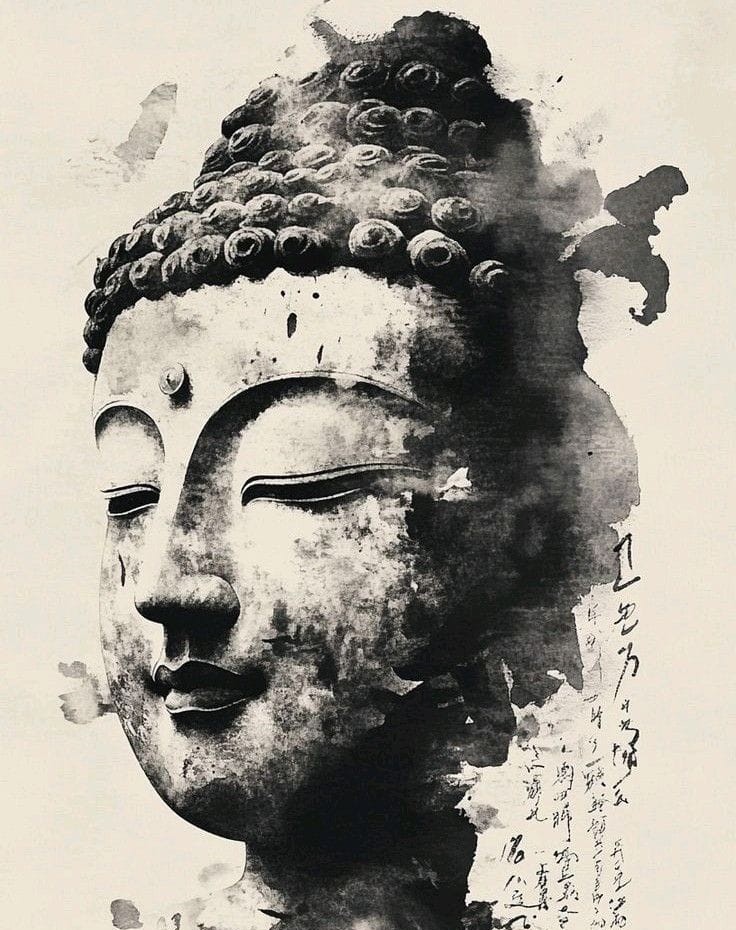
🪷 Gautama Buddha
Lived c. 563 BC – c. 483
BC
Siddhartha Gautama, most commonly referred to as the Buddha
(lit the awakened one') was a wandering ascetic and religious
teacher who lived in the eastern Indo-Gangetic Plains during
the 6th or 5th century BCE and founded Buddhism. According to
Buddhist legends, he was born in Lumbini, in what is now
Nepal,to royal parents of the Shakya clan, but renounced his
home life to live as a wandering ascetic. After leading a life
of mendicancy, asceticism, and meditation, he attained nirvana
at Bodh Gaya in what is now Bihar, India. The Buddha then
wandered through the lower Indo-Gangetic Plain, teaching and
building a monastic order (sangha). Buddhist tradition holds
he died in Kushinagar (in modern day Uttar Pradesh, India) and
reached parinirvana ("final release from conditioned
existence")
Major Contributions
Founder of Buddhism
Four Noble Truths
Noble Eightfold Path
Meditation and Mindfulness
"Peace comes from within. Do not seek it without."
— Gautama Buddha
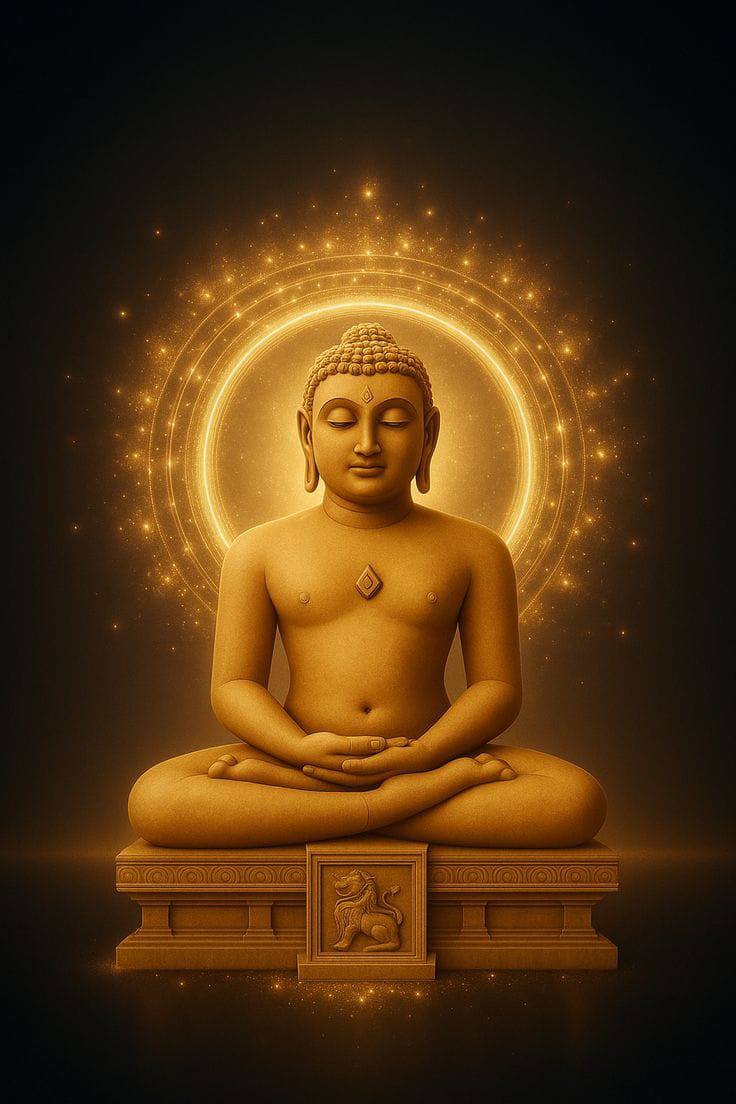
🦁 Mahavira
Lived 599 BC – 527 BC
Mahavira (Mahāvīra), also known by his birth name Vardhamana
(Vardhamāna), was an Indian religious reformer and spiritual
leader, considered by Jains to be the 24th and final
Tirthankara (Supreme Preacher) in the current time cycle of
Jain cosmology. He is believed by historians to have lived in
the 6th or 5th century BCE, reviving and reforming an earlier
Jain or proto-Jain community which had likely been led by
Pārśvanātha, whom Jains consider to be Mahavira's predecessor.
Although the dates of Mahavira's life are uncertain and
historically reliable information is scarce, and traditional
accounts vary by sectarian traditions, the historicity of
Mahavira is well-established and not in dispute among
scholars.
Major Contributions
Jain Philosophy
Ahimsa (Non-violence)
Self-control
Spiritual Liberation
"All living beings long to live. None wishes to suffer."
— Mahavira
📜 Chanakya (Kautilya)
Lived c. 375 BC – c. 283
BC
Chanakya (Cāṇakya, चाणक्य ), according to legendary narratives
preserved in various traditions dating from the 4th to 11th
century CE, was a Brahmin who assisted the first Mauryan
emperor Chandragupta in his rise to power and the
establishment of the Maurya Empire. According to these
narratives, Chanakya served as the chief adviser and prime
minister to both emperors Chandragupta Maurya and his son
Bindusara Conventionally, Chanakya was identified with
Kauṭilya and synonymously Vishnugupta, the author of the
ancient Indian politico-economic treatise Arthashastra
Major Contributions
Arthashastra
Political Philosophy
Economics
Statecraft and Diplomacy
"Education is the best friend. An educated person is
respected everywhere."
— Chanakya (Kautilya)
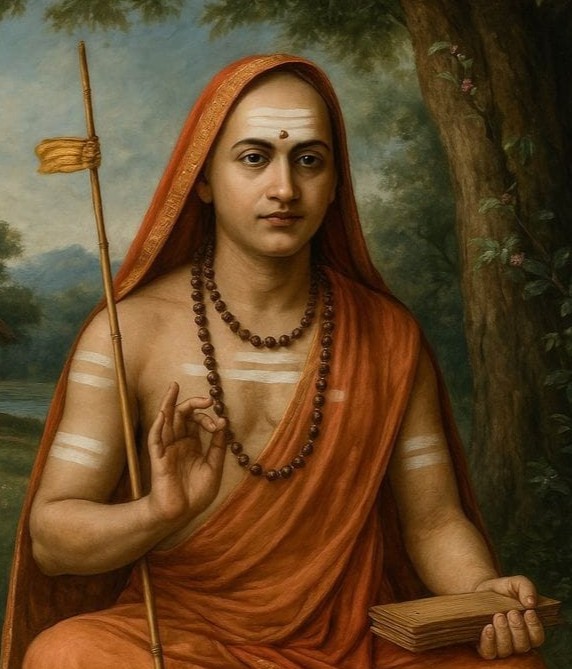
🕉 Adi Shankaracharya
Lived c. 788 AD – c. 820
AD
Adi Shankara also called Adi Shankaracharya (Sanskrit: आदि
शङ्कर, आदि शङ्कराचार्य, Ādi Śaṅkarācārya), was an Indian Vedic
scholar-monk, philosopher, and teacher (acharya) of Advaita
Vedanta.He wrote influential commentaries on the Brahma sutras
and other texts, and in recent times is often revered as the
most important Indian philosopher. Reliable information on
Shankara's actual life is scant, and the historical influence
of his works on Hindu intellectual thought has been
questioned. The historical Shankara was probably relatively
unknown and Vaishnava-oriented and his true impact lies in the
popular perception of him as a heroic religious leader who
re-established traditional Hinduism. His authentic works
present a harmonizing reading of the shastras, with liberating
knowledge of the self at its core, synthesizing the inherited
Advaita Vedanta teachings of his time. The central concern of
Shankara's writings was the liberating knowledge of the true
identity of jīvātman (individual self) as Ātman-Brahman,
emphasizing that "right knowledge arises at the moment of
hearing" the mahāvākyas, without the need of meditating on
them.
Major Contributions
Advaita Vedanta
Commentaries on the Upanishads
Brahma Sutra Bhashya
Spiritual Unity
"Brahman alone is real; the world is an appearance."
— Adi Shankaracharya
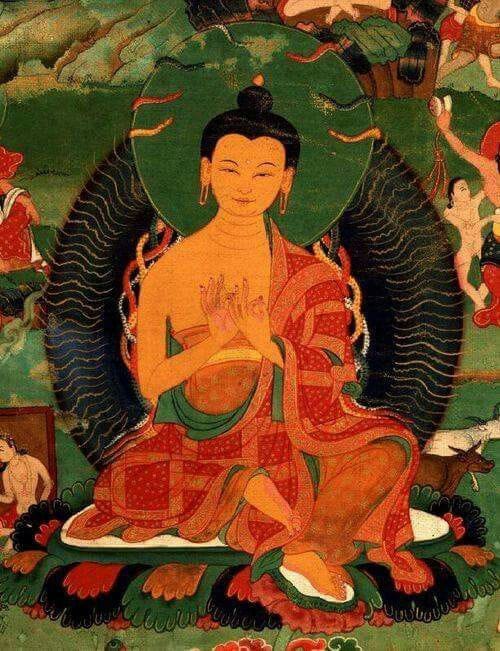
🌸 Nagarjuna
Lived c. 150 AD – c. 250
AD
Nāgārjuna (Nāga + Arjuna), was an Indian scholar-monk,
philosopher, and teacher (acharya) of Mahayana Buddhism from
south India. He is considered the founder of the Madhyamaka
(Centrism, Middle Way) school. Nāgārjuna is widely considered
to be the most important Buddhist philosopher after the Buddha
himself. Indeed, in Tibetan Buddhism, he is even called the
"second Buddha".He was a well known defender of the Mahāyāna
movement and his treatises (śāstras) are the foundational
texts of a school of Buddhist philosophy known as the view of
emptiness (Śūnyatāvāda) or Madhyamaka.Nāgārjuna remains a key
figure in all contemporary traditions of Mahāyāna Buddhism,
and his philosophical writings on the doctrine of “emptiness”
(śūnyatā) influenced Indian philosophy for a millennium, as
well as being an indispensable doctrinal source for Mahāyāna
doctrine in East Asian Buddhism and Indo-Tibetan Buddhism.
Major Contributions
Madhyamaka Philosophy
Śūnyatā (Emptiness)
Middle Way
Mahayana Buddhism
"There is not the slightest difference between samsara and
nirvana."
— Nagarjuna
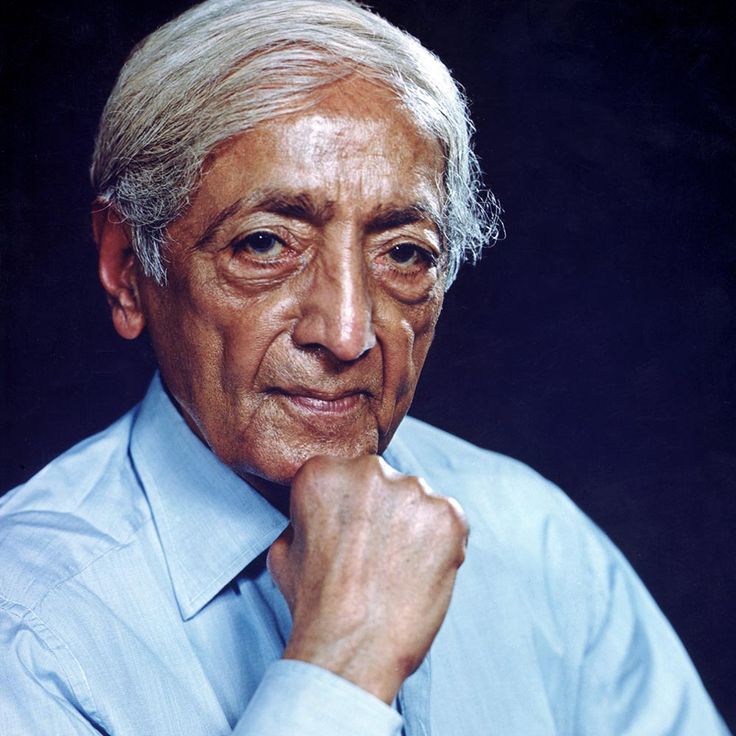
🕊 Jiddu Krishnamurti
Lived 1895 – 1986
Jiddu Krishnamurti (ˈdʒɪduː ˌkrɪʃnəˈmʊərti), was an Indian
spiritual figure, speaker, and writer. Adopted by members of
the Theosophical Society as a child, Krishnamurti was raised
to fill the mantle of the prophesied World Teacher, a role
tasked with aiding humankind's spiritual evolution. In 1922,
he began to suffer from painful, seizure-like mystical
episodes that would produce a lasting change in his perception
of reality. In 1929, he broke from the Theosophy movement and
disbanded the Order of the Star in the East which had been
formed around him. He spent the rest of his life speaking to
groups and individuals around the world, hoping to contribute
a radical transformation of mankind
Major Contributions
Rejected organized religion and spiritual authority
Emphasized self-awareness and direct observation
Explored freedom from fear and psychological conditioning
Inspired modern education through Krishnamurti Schools
"It is no measure of health to be well adjusted to a
profoundly sick society."
— Jiddu Krishnamurti
☯ Chinese Philosophers
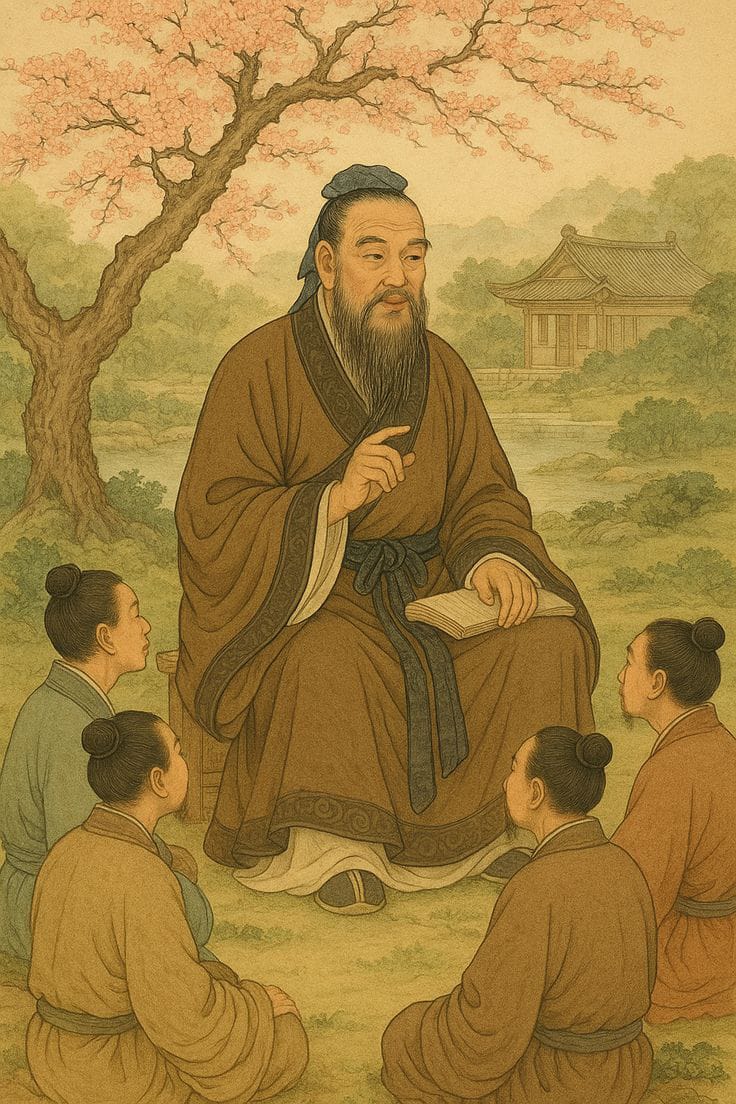
☯ Confucius
Lived 551 BC – 479 BC
Confucius born Kong Qiu, was a Chinese philosopher of the
Spring and Autumn period who is traditionally considered the
paragon of Chinese sages. Much of the shared cultural heritage
of the Sinosphere originates in the philosophy and teachings
of Confucius.His philosophical teachings, called Confucianism,
emphasized personal and governmental morality, harmonious
social relationships, righteousness, kindness, sincerity, and
a ruler's responsibilities to lead by virtue.Confucius
considered himself a transmitter for the values of earlier
periods which he claimed had been abandoned in his time.He
advocated for filial piety, endorsing strong family loyalty,
ancestor veneration, and the respect of elders by their
children and of husbands by their wives.
Major Contributions
Confucianism
Ethics and Morality
Education for Everyone
Good Governance
"It does not matter how slowly you go as long as you do not
stop."
— Confucius
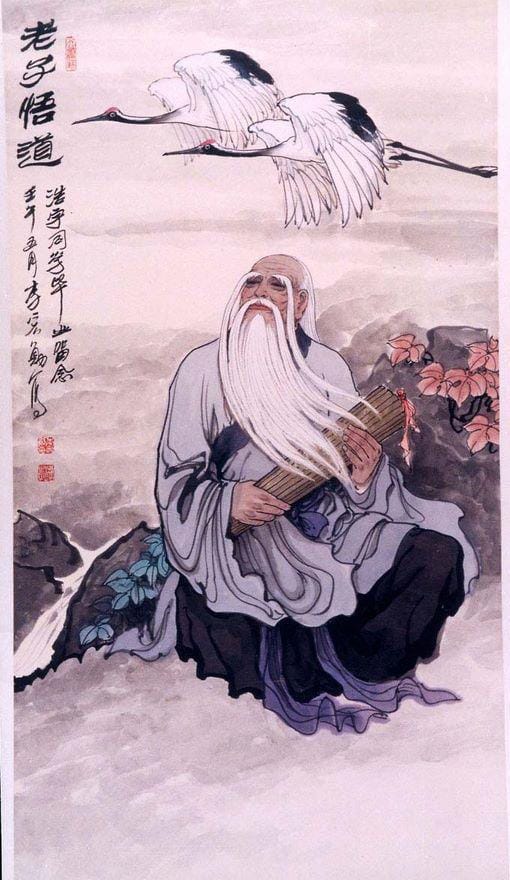
🌌 Lao Tzu
Lived Traditionally 6th
Century BC
Laozi (laʊ.ˈtsʌ/, Chinese: 老子;), was a legendary Chinese
philosopher considered to be the author of the Tao Te Ching ,
one of the foundational texts of Taoism. Modern scholarship
generally regards his biographical details as later inventions
and his opus a collaboration of various writers, with the name
Laozi, literally meaning 'Old Master', likely intended to
portray an archaic anonymity that could converse with
Confucianism. Traditional accounts addend him as Li Er, born
in the 6th-century BC state of Chu during China's Spring and
Autumn period. Serving as the royal archivist for the Zhou
court at Wangcheng , he met and impressed Confucius on one
occasion, composing the Dào Dé Jīng in a single session before
retiring into the western wilderness.
Major Contributions
Taoism (Daoism)
Tao Te Ching
Wu Wei (Effortless Action)
Harmony with Nature
"The journey of a thousand miles begins with one step."
— Lao Tzu
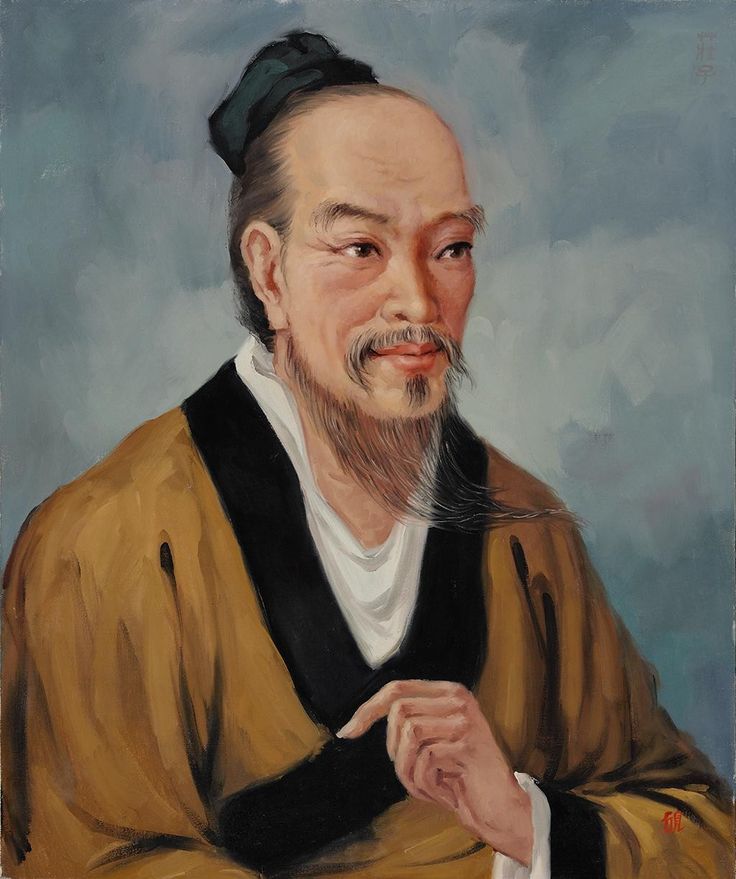
🦋 Zhuangzi
Lived 369 BC – 286 BC
Zhuang Zhou (dʒwɑːŋ ˈdʒoʊ/), honorifically often known as
Zhuangzi (dʒwɑːŋdzʌ/), was an influential Chinese philosopher
who lived around the 4th century BCE during the Warring States
period, a period of great development in Chinese philosophy,
the Hundred Schools of Thought. He is credited with writing—in
part or in whole—a work known by his name, the Zhuangzi, which
is one of two foundational texts of Taoism, alongside the Tao
Te Ching.Zhuangzi expanded Taoist philosophy through stories
and parables. He believed that true wisdom comes from freedom
of thought, simplicity, and living in harmony with the
changing world.
Major Contributions
Taoist Philosophy
Freedom of Mind
Natural Living
Philosophical Parables
"Happiness is the absence of the striving for happiness."
— Zhuangzi
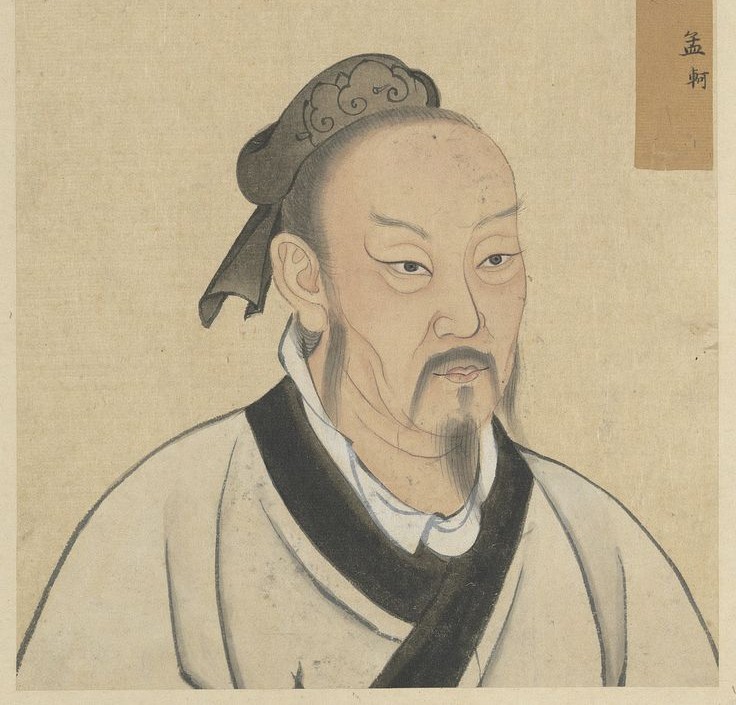
⚖ Mencius
Lived 372 BC – 289 BC
Mencius (孟子, Mèngzǐ), born Meng Ke (孟軻), was a Chinese
Confucian philosopher, often described as the Second Sage to
reflect his traditional esteem relative to Confucius himself.
He was part of Confucius's fourth generation of disciples,
inheriting his ideology and developing it further. Living
during the Warring States period, he is said to have spent
much of his life travelling around the states offering counsel
to different rulers. Conversations with these rulers form the
basis of the Mencius, which would later be canonised as a
Confucian classic.
Major Contributions
Development of Confucianism
Human Nature is Good
Benevolent Government
Moral Education
"The great man is he who does not lose his child's heart."
— Mencius
💡 Enlightenment & Modern Philosophers
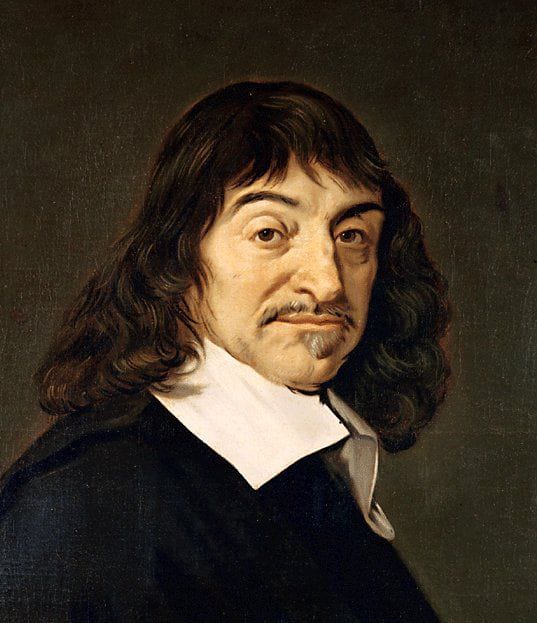
📖 René Descartes
Lived 1596 – 1650
René Descartes [ʁəne dekaʁt], was a French polymath, active
across philosophy, including metaphysics, epistemology,
ethics, and the philosophy of science; theology; mathematics,
in which he connected the previously separate fields of
geometry and algebra into analytic geometry; science,
including physics, optics, mechanics, cosmology, and
meteorology; physiology; and medicine. He has been credited as
the father of modern philosophy, particularly due to his
transformation of methodology by introducing a systematic,
method-based approach to pursuing knowledge.
Major Contributions
Father of Modern Philosophy
Rationalism
Mind–Body Dualism
Analytical Geometry
"I think, therefore I am."
— René Descartes
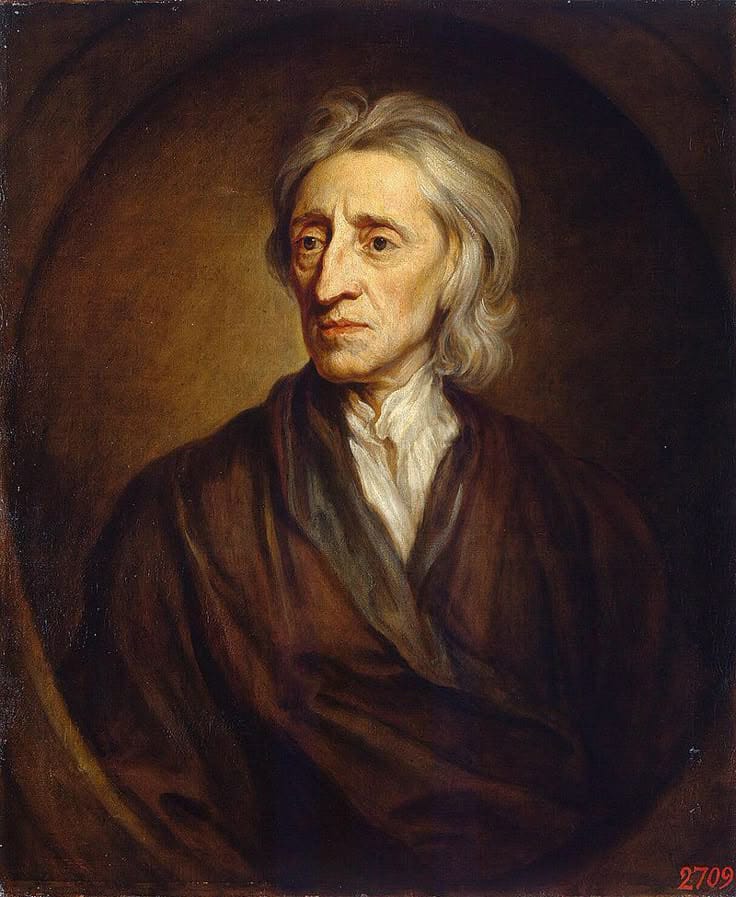
🔓 John Locke
Lived 1632 – 1704
John Locke (lɒk) was an English philosopher and physician,
widely regarded as one of the most influential of the
Enlightenment thinkers and commonly known as the "father of
liberalism". His important works include A Letter Concerning
Toleration (1689), Two Treatises of Government (1689/90), both
published anonymously, and An Essay Concerning Human
Understanding (1689/90). His writing on toleration contends
that religion is a matter for the individual and that the
churches are voluntary associations, ruling out religious
coercion and uniformity; these lead to the idea of separation
of church and state. His Two Treatises on Government argues
for government based on the consent of the governed and the
right to revolt against tyrannous government which has lost
consent. The Two Treatises are believed to have influenced the
language that Thomas Jefferson chose in his drafting the July
1776 Declaration of Independence during the War of American
Independence.
Major Contributions
Empiricism
Natural Rights
Social Contract
Liberalism
"Where there is no law, there is no freedom."
— John Locke
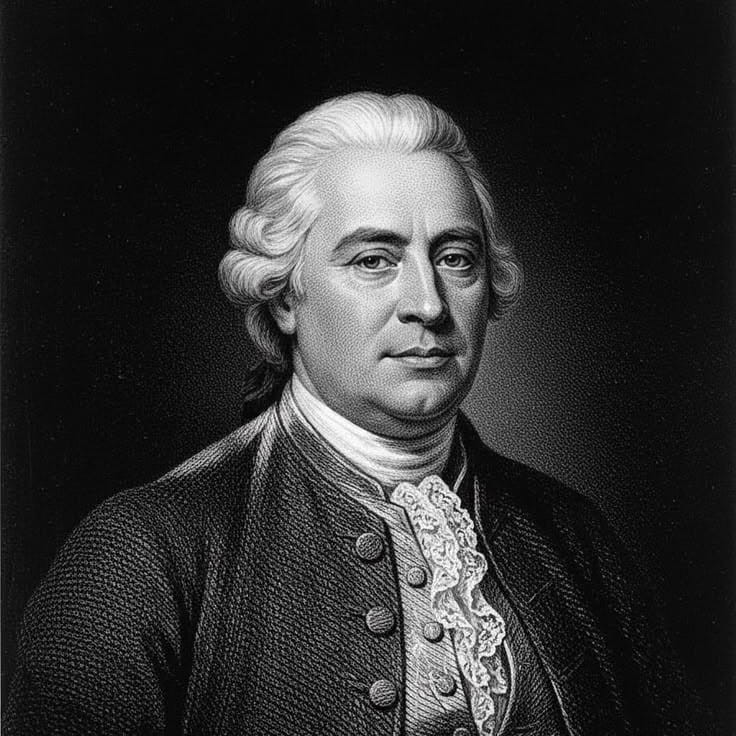
🔍 David Hume
Lived 1711 – 1776
David Hume (hjuːm) was a Scottish philosopher, historian,
economist and essayist who is known for his highly influential
system of empiricism, philosophical scepticism and
metaphysical naturalism. Beginning with A Treatise of Human
Nature (1739–40), Hume strove to create a naturalistic science
of man that examined the psychological basis of human nature.
Following John Locke, Hume rejected the existence of innate
ideas, holding that all our ideas derive ultimately from
impressions, but in his fork he distinguished relations of
ideas, known a priori, from matters of fact, whose knowledge
rests on experience. This places him in the empiricist
tradition of Locke and George Berkeley, while drawing his
experimental method from Francis Bacon.
Major Contributions
Empiricism
Skepticism
Philosophy of Mind
Theory of Causation
"Reason is, and ought only to be, the slave of the
passions."
— David Hume
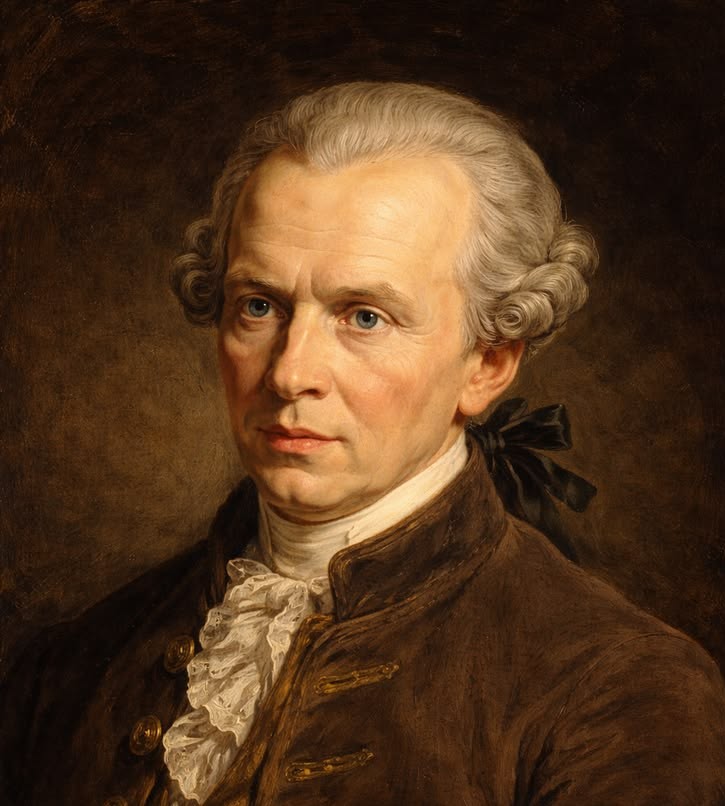
💡 Immanuel Kant
Lived 1724 – 1804
Immanuel Kant was a German philosopher. Born in Königsberg in
the Kingdom of Prussia, he is considered one of the central
thinkers of the Enlightenment. His comprehensive and
systematic works in epistemology, metaphysics, logic, ethics,
aesthetics, political theory, and the philosophy of religion
have made him one of the most influential and highly discussed
figures in modern Western philosophy. Kant's philosophy is
centered on the human subject and motivated by the desire to
secure the possibility of both knowledge and morality against
the threats of skepticism and determinism. In the Critique of
Pure Reason (1781/1787), Kant argues for transcendental
idealism, the doctrine that space and time are mere "forms of
intuition" (German: Anschauung) that structure all experience
and that we have knowledge only of "appearances" and not of
the nature of things in themselves. Kant drew a parallel to
the Copernican Revolution in his proposal to think of the
objects of experience as conforming to people's spatial and
temporal forms of intuition and the categories of the
understanding, instead of the traditional method of showing
how the mind might conform to its objects.
Major Contributions
Critique of Pure Reason
Categorical Imperative
Epistemology
Moral Philosophy
"Sapere aude! Have courage to use your own understanding."
— Immanuel Kant
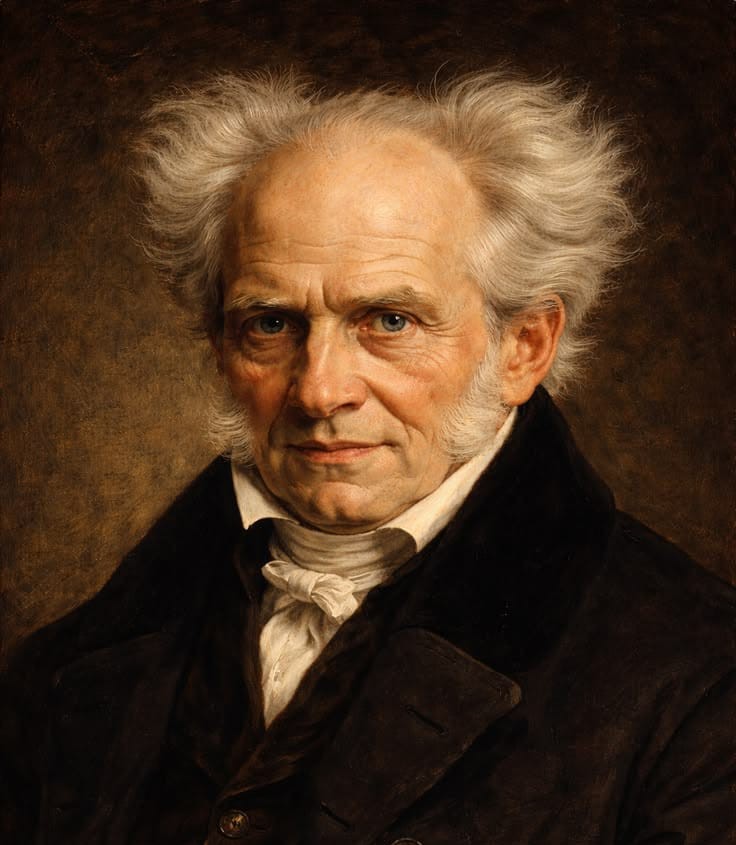
⚫ Arthur Schopenhauer
Lived 1788 – 1860
Arthur Schopenhauer was a German philosopher and writer. He is
known for his 1818 work The World as Will and Representation
(expanded in 1844), which characterizes the phenomenal world
as the manifestation of a blind and irrational noumenal will.
Building on the transcendental idealism of Immanuel Kant,
Schopenhauer developed an atheistic metaphysical and ethical
system that rejected the contemporaneous ideas of German
idealism. Schopenhauer was among the first philosophers in the
Western tradition to share and affirm significant tenets of
Indian philosophy, such as asceticism, denial of the self, and
the notion of the world-as-appearance
Major Contributions
The World as Will and Representation
Pessimism
Will as Reality
Influence on Existentialism
"Compassion is the basis of morality."
— Arthur Schopenhauer
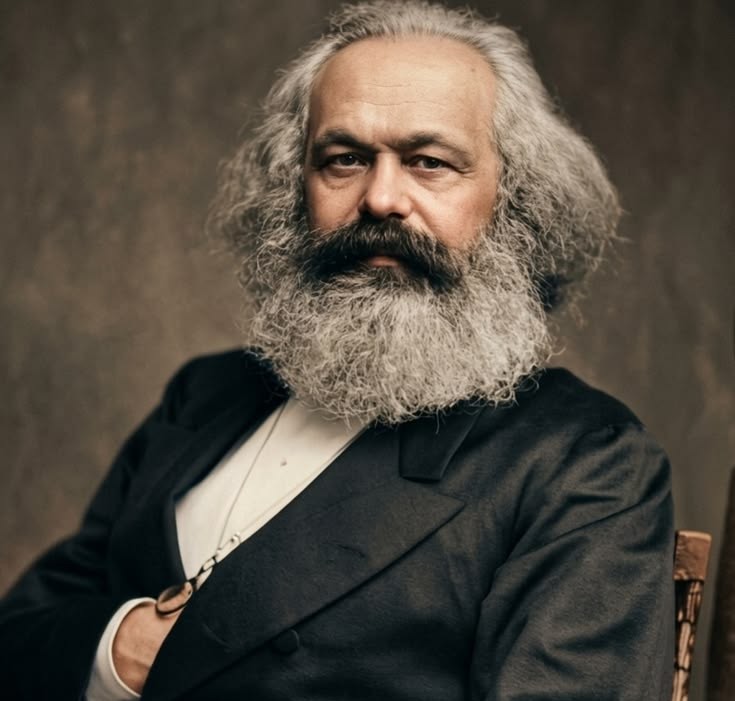
⚒ Karl Marx
Lived 1818 – 1883
Karl Marx [ˈkaʁl ˈmaʁks], was a German philosopher, social and
political theorist, economist, and revolutionary socialist. He
developed the theory of historical materialism, analyzing
class struggle under capitalism and predicting the system's
overthrow by the proletariat in favour of communism. Marx
co-authored The Communist Manifesto (1848) with Friedrich
Engels, and undertook a critique of classical political
economy in his magnum opus, Das Kapital (1867–1894). Marx's
ideas and their subsequent development, collectively known as
Marxism, have had enormous influence and have influenced
revolutions and uprisings in many countries.Marx's critiques
of history, society and political economy hold that human
societies develop through class conflict. In the capitalist
mode of production, this manifests itself in the conflict
between the ruling classes (the bourgeoisie) that control the
means of production and the working classes (the proletariat)
that enable these means by selling their labour power for
wages.
Major Contributions
Historical Materialism
Communism
Critique of Capitalism
Class Struggle
"The philosophers have only interpreted the world; the point
is to change it."
— Karl Marx
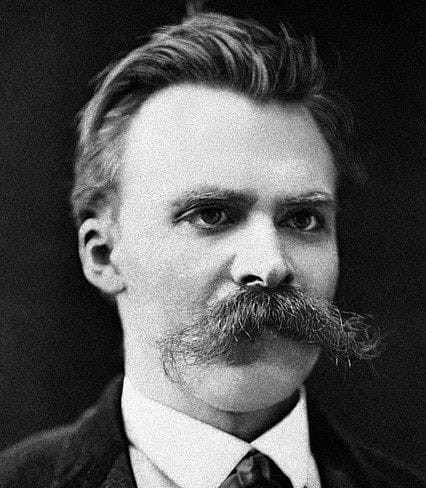
⚡ Friedrich Nietzsche
Lived 1844 – 1900
Friedrich Wilhelm Nietzsche was a German philosopher and
writer who started his career as a classical philologist and
turned to philosophy early in his academic career. In 1869, at
age 24, he was appointed Professor of Classical Philology at
the University of Basel. Plagued by health problems for most
of his life, he resigned from the university in 1879. He
afterward lived as an independent writer, spending much of his
life in relative solitude and financial insecurity while
moving between Switzerland, Italy, and southern France in
search of climates that might alleviate his condition, and in
the following decade, he completed much of his core writing.
In 1889, aged 44, he suffered a neurological collapse, and
thereafter a complete loss of his mental faculties, with
paralysis and vascular dementia;Nietzsche's work encompasses
poetry, cultural criticism, and philosophical essays while
displaying a fondness for aphorisms and irony. Prominent
elements of his philosophy include his critique of objective
truth in favour of perspectivism; a genealogical critique of
Christian morality and a related theory of master–slave
morality; the affirmation of life in response to both the
weakening of religion ("God is dead") and the crisis of
passive nihilism which followed it; the notion of Apollonian
and Dionysian duality; and a characterisation of the human
subject as the expression of competing wills, collectively
understood as the will-to-power.
Major Contributions
Will to Power
Übermensch
Critique of Morality
Existential Thought
"He who has a why to live can bear almost any how."
— Friedrich Nietzsche
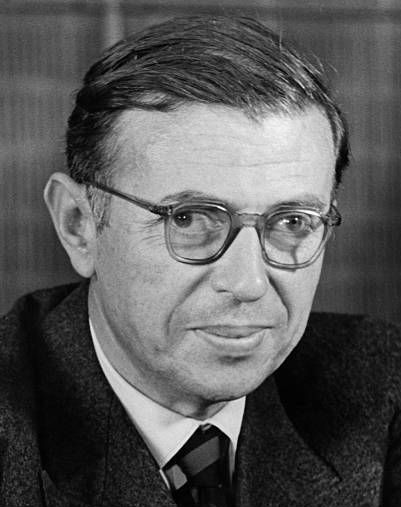
🌍 Jean-Paul Sartre
Lived 1905 – 1980
Jean-Paul Charles Aymard Sartre [saʁtʁ], was a French
philosopher, playwright, novelist, screenwriter, political
activist, biographer, and literary critic, considered a
leading figure in 20th-century French philosophy and Marxism.
Sartre was one of the key figures in the philosophy of
existentialism (and phenomenology) and was a proponent of
Libertarian Marxism. His work has influenced sociology,
critical theory, post-colonial theory, and literary studies.
He was awarded the 1964 Nobel Prize in Literature despite
attempting to refuse it, saying that he always declined
official honors and that "a writer should not allow himself to
be turned into an institution".
Major Contributions
Existentialism
Freedom
Responsibility
Phenomenology
"Man is condemned to be free."
— Jean-Paul Sartre
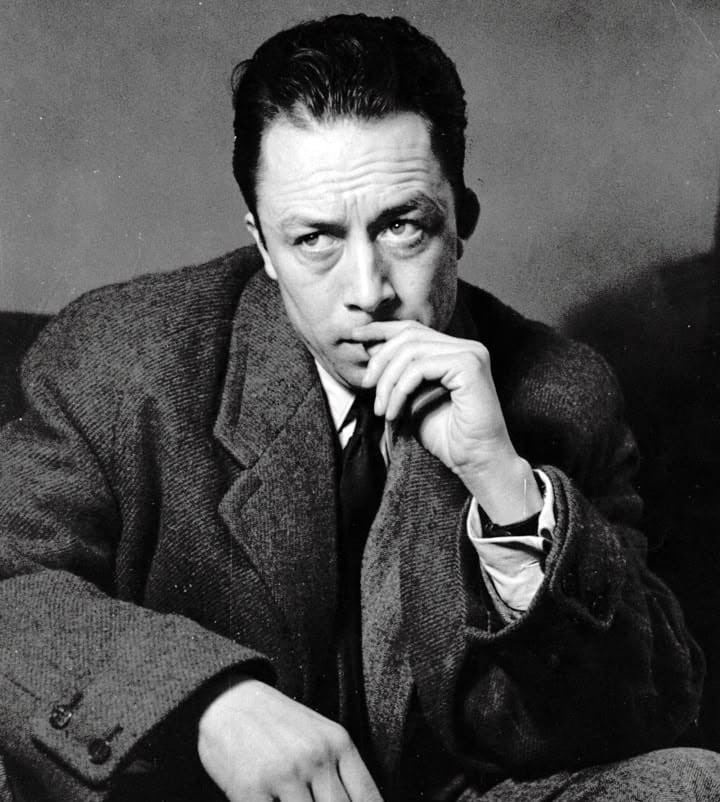
🎭 Albert Camus
Lived 1913 – 1960
Albert Camus [albɛʁ kamy] was a French philosopher, novelist,
author, dramatist, journalist, world federalist, and political
activist. He was the recipient of the 1957 Nobel Prize in
Literature at the age of 44, the second-youngest recipient in
history, and the first laureate in literature born in Africa.
His works include The Stranger, The Plague, The Myth of
Sisyphus, The Fall and The Rebel.Camus was politically active;
he was part of the left that opposed Joseph Stalin and the
Soviet Union because of their totalitarianism. Camus was a
moralist and leaned towards anarcho-syndicalism. He was part
of many organisations seeking European integration. During the
Algerian War (1954–1962), he kept a neutral stance, advocating
a multicultural and pluralistic Algeria, a position that was
rejected by most parties.
Major Contributions
Absurdism
The Myth of Sisyphus
The Stranger
Revolt and Freedom
"The struggle itself toward the heights is enough to fill a
man's heart."
— Albert Camus
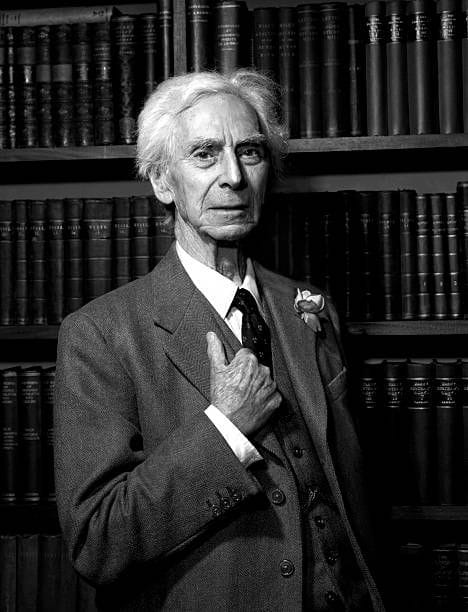
🧠 Bertrand Russell
Lived 1872 – 1970
Russell was born into the prominent Russell family, to the
Viscount and Viscountess Amberley. He was orphaned at the age
of four and moved into Pembroke Lodge to live with his
grandparents, the Earl and Countess Russell. The Earl Russell
had twice been Prime Minister of the United Kingdom
(1846–1852; 1865–1866) and died in 1878, leaving Russell in
the care of his grandmother.He was one of the early 20th
century's prominent logicians and a founder of analytic
philosophy, along with his predecessor Gottlob Frege, his
friend and colleague G. E. Moore, and his student and protégé
Ludwig Wittgenstein. Russell with Moore led the British
"revolt against idealism". Together with his former teacher
Alfred North Whitehead, Russell wrote Principia Mathematica, a
milestone in the development of classical logic and a major
attempt to reduce the whole of mathematics to logic (see
logicism). Russell's article "On Denoting" has been considered
a "paradigm of philosophy".
Major Contributions
Analytic Philosophy
Mathematical Logic
Philosophy of Language
Pacifism
"The good life is one inspired by love and guided by
knowledge."
— Bertrand Russell
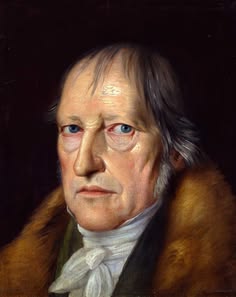
📖 G. W. F. Hegel
Lived 1770 – 1831
Georg Wilhelm Friedrich Hegel was a German philosopher and a
major figure in the tradition of German idealism. His
influence on Western philosophy extends across a wide range of
topics—from metaphysical issues in epistemology and ontology,
to political philosophy, to philosophy of art and philosophy
of religion. Hegel was born in Stuttgart. His life spanned the
transitional period between the Enlightenment and the Romantic
movement. His thought was shaped by the French Revolution and
the Napoleonic wars, events which he interpreted from a
philosophical perspective. His academic career culminated in
his appointment to the chair of philosophy at the University
of Berlin, where he remained a prominent intellectual figure
until his death.
Major Contributions
Absolute idealism
Dialectical method
Philosophy of history
"The real is rational and the rational is real."
— G. W. F. Hegel
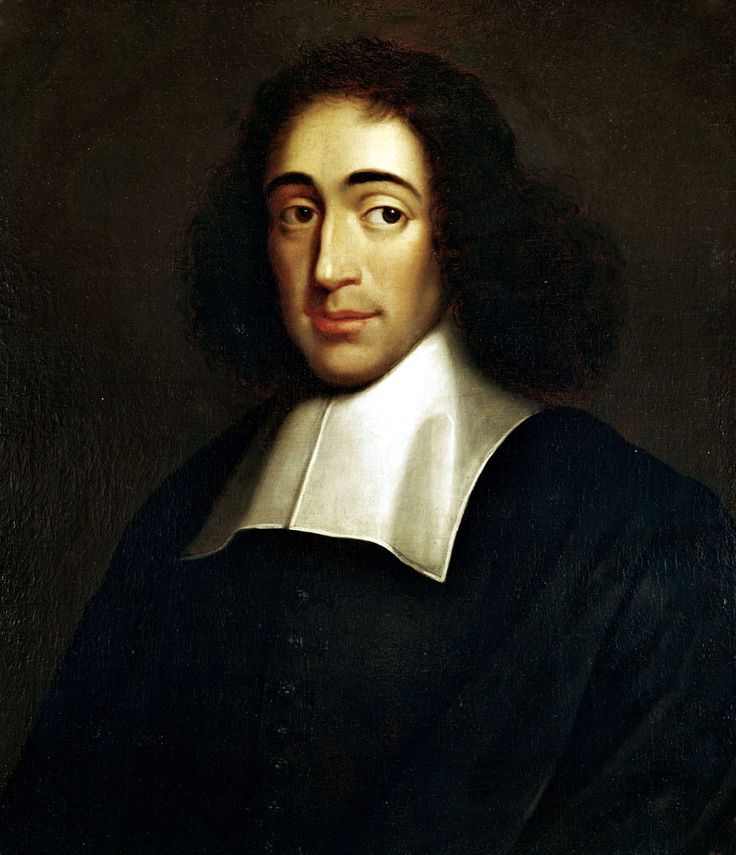
📜Baruch Spinoza
Lived 1632 – 1677
Baruch (de) Spinoza also known under his Latinized pen name
Benedictus de Spinoza, was a philosopher of Portuguese-Jewish
origin who was born and lived in the Dutch Republic. A
forerunner of the Enlightenment, Spinoza significantly
influenced modern biblical criticism, 17th-century
rationalism, and Dutch intellectual culture, establishing
himself as one of the most important and radical philosophers
of the early modern period. Influenced by Stoicism, Thomas
Hobbes, René Descartes, and heterodox Christians, Spinoza was
a leading philosopher of the Dutch Golden Age.
Major Contributions
Ethics in geometric order
Monism (God or Nature)
Rationalist ethics
"The more you struggle to live, the less you live. Give up
the notion that you must be sure of what you are doing."
— Baruch Spinoza
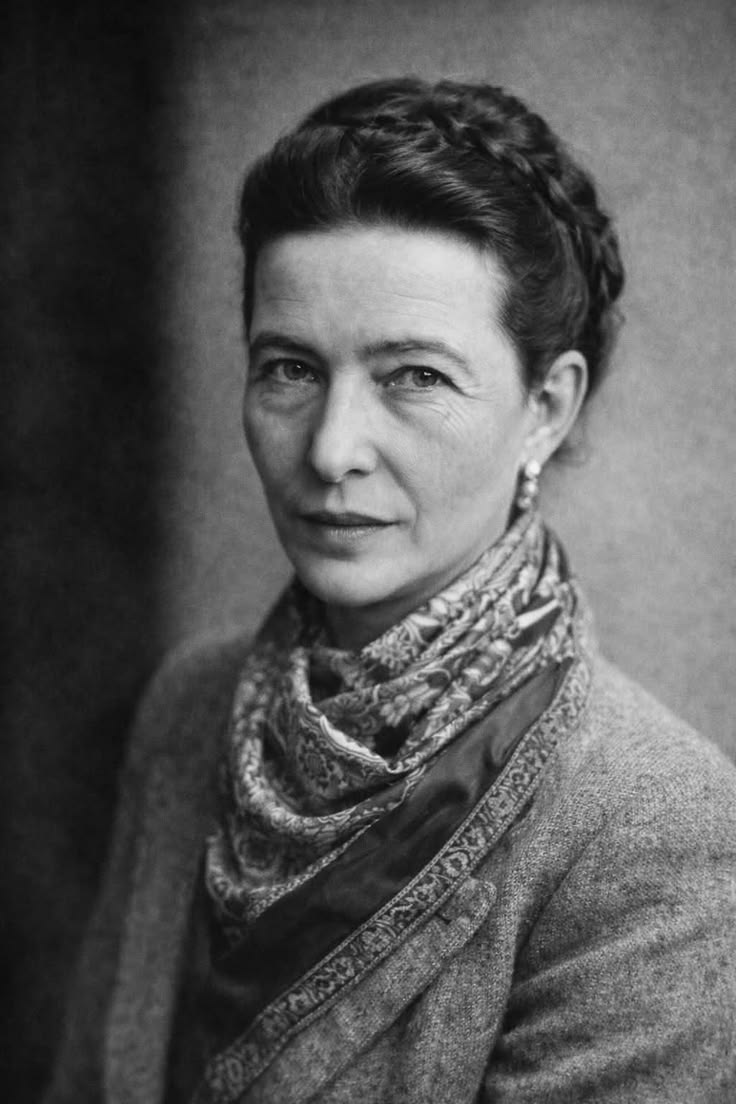
🌸 Simone de Beauvoir
Lived 1908 – 1986
Simone Lucie Ernestine Marie Bertrand de Beauvoir was a French
existentialist philosopher, writer, social theorist, and
feminist activist. Though she did not consider herself a
philosopher, nor was she considered one at the time of her
death, she had a significant influence on both feminist
existentialism and feminist theory. Beauvoir wrote novels,
essays, short stories, biographies, autobiographies, and
monographs on philosophy, politics, and social issues. She was
best known for her "trailblazing work in feminist philosophy",
The Second Sex (1949), a detailed analysis of women's
oppression and a foundational tract of contemporary feminism.
She was also known for her novels, the most famous of which
were She Came to Stay (1943) and The Mandarins (1954).
Major Contributions
Existentialist ethics
Feminist theory — The Second Sex
Phenomenology of freedom and otherness
"One is not born, but rather becomes, a woman."
— Simone de Beauvoir
☪ Islamic Philosophers
☯ Al‑Ghazali
Lived 1058 – 1111
Al-Ghazali (ابو حامد محمد ابن محمد غزالی توسی, Abū Ḥāmid
Muḥammad ibn Muḥammad Ghazālī Ṭūsi ) Latinized as Algazelus,
was a Shafi'i Sunni Muslim Persian scholar and polymath. He is
known as one of the most prominent and influential
jurisconsults, legal theoreticians, muftis, philosophers,
theologians, logicians and mystics in Islamic history. He is
considered to be the 11th century's mujaddid, a renewer of the
faith, who, according to the prophetic hadith, appears once
every 100 years to restore the faith of the Islamic community.
Al-Ghazali's works were so highly acclaimed by his
contemporaries that he was awarded the honorific title "Proof
of Islam" (Ḥujjat al-Islām). Al-Ghazali was a prominent
mujtahid in the Shafi'i school of law. Much of al-Ghazali's
work stemmed around his spiritual crises following his
appointment as the head of the Nizamiyya of Baghdad, which was
the most prestigious academic position in the Muslim world at
the time. This led to his eventual disappearance from the
Muslim world for over 10 years, realising he chose the path of
status and ego over God
Major Contributions
Theology and Sufism synthesis
Critique of philosophical overreach
Islamic jurisprudence and ethics
"Knowledge without action is wastefulness and action without
knowledge is foolishness."
— Al‑Ghazali
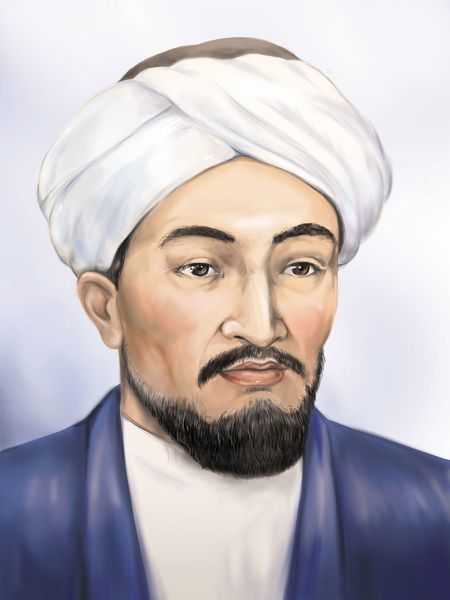
☯ Al‑Farabi
Lived 872 – 950
Abu Nasr Muhammad al-Farabi ( أبو نصر محمد الفارابي, Abū Naṣr
Muḥammad al-Fārābī0) known in the Latin West as Alpharabius,
was an early Islamic philosopher and music theorist. He has
been designated as "Father of Islamic Neoplatonism", and the
"Founder of Islamic Political Philosophy". Al-Farabi's fields
of philosophical interest included—but were not limited
to—philosophy of society and religion; philosophy of language
and logic; psychology and epistemology; metaphysics, political
philosophy, and ethics. He was an expert in both practical
musicianship and music theory, and although he was not
intrinsically a scientist,his works incorporate astronomy,
mathematics,cosmology,and physics. Al-Farabi is credited as
the first Muslim who presented philosophy as a coherent system
in the Islamic world, and created a philosophical system of
his own, which developed a philosophical system that went far
beyond the scholastic interests of his Greco-Roman
Neoplatonism and Syriac Aristotelian precursors. That he was
more than a pioneer in Islamic philosophy is evident from
later writers calling him the "Second Master",with Aristotle
as the first.
Major Contributions
Islamic Neoplatonism and Aristotelian synthesis
Political philosophy of the virtuous city
Logic and metaphysics
"Happiness is the perfection of the human soul."
— Al‑Farabi
☯ Avicenna (Ibn Sina)
Lived 980 – 1037
Abu Ali al‑Husayn ibn Abdullah ibn Sina (أبو علي الحسين بن عبد
الله بن سينا), known in the West as Avicenna, was a Persian
polymath who made lasting contributions to medicine,
philosophy, and the sciences. He is best known for his medical
encyclopedia "The Canon of Medicine" (Al‑Qanun fi al‑Tibb),
which served as a standard medical text in both the Islamic
world and Europe for centuries. In philosophy he synthesized
Aristotelian thought with Neoplatonic and Islamic ideas,
producing influential works on metaphysics, logic, and
psychology.
Major Contributions
The Canon of Medicine — systematic medical encyclopedia
Metaphysics and the concept of essence and existence
Foundations of early psychology and philosophy of mind
"Medicine is a science from which one learns the states of
the human body with respect to what is beneficial and
harmful to it."
— Avicenna (Ibn Sina)
☯ Averroes (Ibn Rushd)
Lived 1126 – 1198
Abu al‑Walid Muhammad ibn Ahmad ibn Rushd (أبو الوليد محمد بن
أحمد بن رشد), known as Averroes in the Latin West and Ibn
Rushd in Arabic, was an Andalusian philosopher, jurist, and
physician. He is celebrated for his extensive commentaries on
Aristotle, which revived Aristotelian philosophy in medieval
Europe and deeply influenced later scholastic thought.
Averroes argued for the compatibility of religion and
philosophy, defended rational inquiry, and wrote on law,
medicine, and political theory.
Major Contributions
Authoritative commentaries on Aristotle
Defense of rationalism and the harmony of faith and reason
Works on law, medicine, and political philosophy
"The first duty of a man is to think for himself."
— Averroes (Ibn Rushd)
Think Like a Philosopher
Is lying always wrong?
Do humans truly have free will?
Can machines become conscious?
Is happiness more important than truth?
Can we ever know reality with certainty?
What makes a life meaningful?
Quote of the Page
"Knowing yourself is the beginning of all wisdom."
— Aristotle
Every Great Idea Begins With a Question
Although these philosophers lived centuries apart, each one
challenged humanity to think more deeply about truth, justice,
happiness, knowledge, and existence. Their ideas continue to
influence psychology, politics, science, economics, and artificial
intelligence.