Who Was Edmund Husserl?
Edmund Husserl was a German philosopher, born in 1859 in Prossnitz, Moravia, who is widely regarded as the founder of phenomenology, one of the most influential philosophical movements of the twentieth century. Originally trained as a mathematician, Husserl gradually turned toward philosophy in an effort to secure rigorous logical and epistemological foundations for mathematics and the sciences, a concern that would shape his entire subsequent philosophical project.
Husserl's central philosophical achievement was developing a new method for investigating the structures of consciousness as they present themselves to a subject, independent of unexamined scientific or metaphysical assumptions about the ultimate nature of reality. Summarized in his famous call to return "to the things themselves," Husserl's phenomenology sought to describe experience with maximum precision and minimum theoretical presupposition, treating consciousness itself as a legitimate and rigorously analyzable field of philosophical investigation.
Central to this project is Husserl's concept of intentionality, the claim that consciousness is always consciousness of something, directed toward objects whether real, imagined, remembered, or abstract. Husserl developed increasingly sophisticated methods for analyzing this directedness, including the famous phenomenological reduction, or epoché, a disciplined suspension of ordinary belief in the world's independent existence intended to reveal the essential structures through which objects are given to consciousness.
Husserl is particularly important because he founded an entire philosophical school and method that would go on to shape much of twentieth-century Continental philosophy, training or influencing major subsequent thinkers including Martin Heidegger, Jean-Paul Sartre, Maurice Merleau-Ponty, and Emmanuel Levinas, each of whom adapted and transformed Husserlian phenomenology in significantly different directions while remaining indebted to his foundational methodological innovations.
Husserl's later life was also marked by the tragedy of Nazi persecution, as his Jewish ancestry led to his exclusion from German academic life during the final years before his death in 1938. This history, including his complicated relationship with his former student and successor Heidegger, adds a poignant historical dimension to Husserl's legacy as the founder of a philosophical movement that continued to develop and diversify long after his death, remaining one of the central reference points for understanding twentieth-century philosophy of mind and existential thought.
Edmund Husserl: Quick Facts
- Full name — Edmund Gustav Albrecht Husserl
- Born — April 8, 1859, Prossnitz, Moravia, Austrian Empire
- Died — April 27, 1938, Freiburg im Breisgau, Germany
- Philosophical tradition — Founder of phenomenology
- Known for — Intentionality, the phenomenological reduction (epoché), the transcendental ego, the lifeworld
- Central concept — Consciousness as always intentional, or directed toward an object
- Key influences — Franz Brentano, Bernard Bolzano, Immanuel Kant, René Descartes
- Major works — Logical Investigations (1900-01), Ideas (1913), Cartesian Meditations (1931), The Crisis of European Sciences (1936, unfinished)
- Notable students — Martin Heidegger, Edith Stein, Roman Ingarden
- Historical importance — Founder of phenomenology, one of the most influential philosophical movements of the twentieth century
Edmund Husserl's Early Life and Education
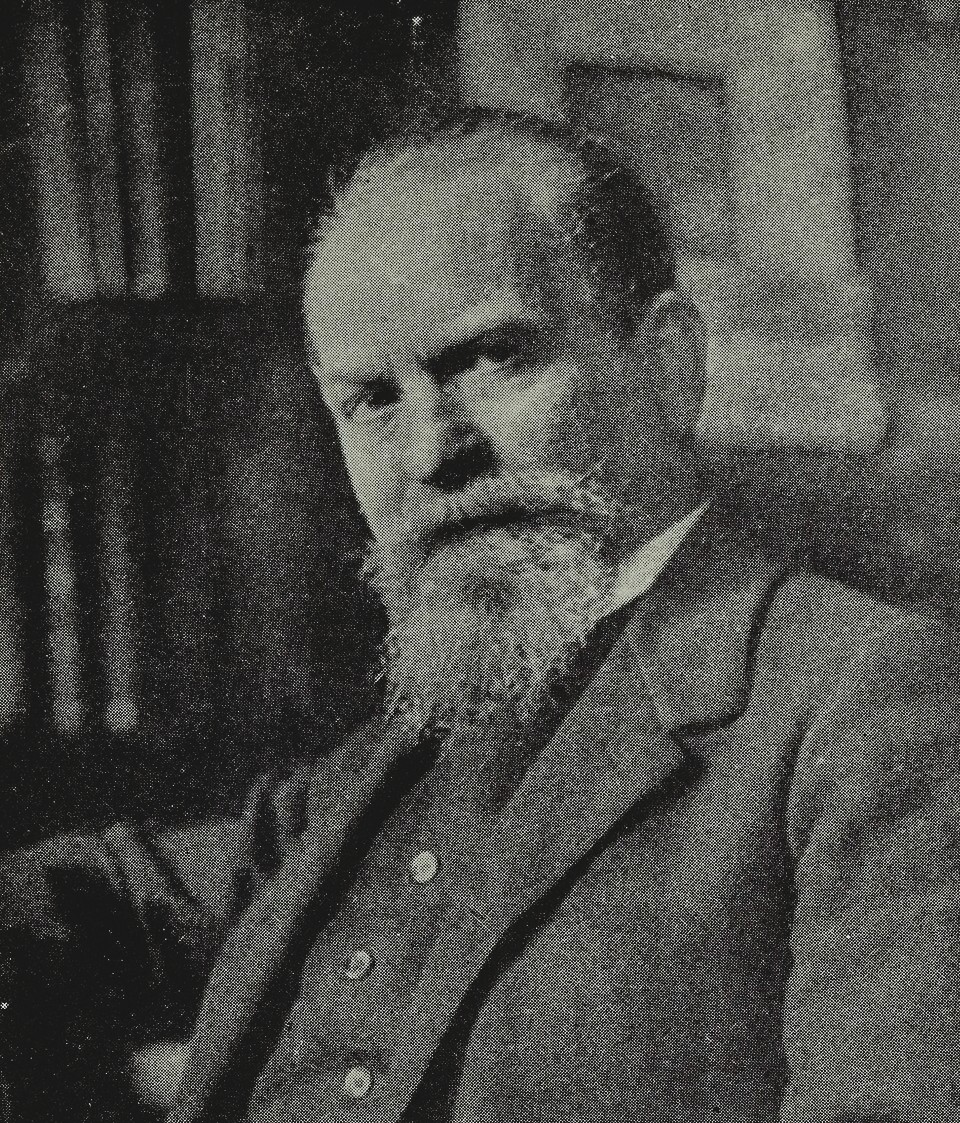
Edmund Husserl was born on April 8, 1859, in Prossnitz, Moravia, then part of the Austrian Empire, into an assimilated Jewish family of modest commercial background. He pursued advanced studies in mathematics, astronomy, and physics at the universities of Leipzig, Berlin, and Vienna, eventually completing a doctorate in mathematics in 1883 under the supervision of Karl Weierstrass, one of the leading mathematicians of the period.
Husserl's turn from mathematics toward philosophy was decisively shaped by his encounter with Franz Brentano, whose lectures in Vienna introduced Husserl to the concept of intentionality, the idea that mental phenomena are characteristically directed toward objects, a concept Brentano had revived from medieval scholastic philosophy. This encounter proved transformative, convincing Husserl to abandon mathematics as his primary vocation in favor of philosophical investigation into the foundations of logic, mathematics, and consciousness itself.
Husserl's early philosophical work focused on the philosophy of arithmetic, attempting in his 1891 book Philosophy of Arithmetic to ground mathematical concepts in an analysis of the psychological processes through which numbers are apprehended, an approach later criticized as a form of psychologism, the reduction of logical and mathematical truths to merely psychological facts about human cognition, a criticism that would prove decisive for Husserl's subsequent philosophical development.
Stung by this criticism, particularly from the mathematician and philosopher Gottlob Frege, Husserl undertook a significant reconsideration of his approach, coming to agree that logical and mathematical truths possessed an objective, ideal validity independent of contingent psychological processes. This reconsideration directly shaped his monumental Logical Investigations, published in 1900-01, which simultaneously refuted psychologism and introduced the phenomenological method that would define the remainder of Husserl's philosophical career.
Husserl subsequently held academic positions at the universities of Halle, Göttingen, and finally Freiburg, where he was appointed professor of philosophy in 1916. At Freiburg and previously at Göttingen, Husserl attracted a devoted and philosophically gifted circle of students and colleagues, gradually establishing phenomenology as a recognized and increasingly influential philosophical movement extending well beyond his own individual research and teaching.
Franz Brentano and the Concept of Intentionality
Franz Brentano, Husserl's teacher in Vienna, revived the medieval scholastic concept of intentionality in his 1874 work Psychology from an Empirical Standpoint, proposing that intentionality, the directedness of mental acts toward objects, constitutes the essential mark distinguishing mental phenomena from purely physical phenomena. According to Brentano, every mental act, whether perceiving, remembering, judging, or desiring, is characteristically directed toward some object, even when that object does not actually exist in external reality.
Husserl adopted and substantially developed this Brentanian concept of intentionality, transforming it from a criterion for distinguishing mental from physical phenomena into the central organizing concept of his entire phenomenological method. For Husserl, careful analysis of intentional structures, examining how different types of mental acts, such as perceiving, imagining, or judging, relate to their respective objects, became the primary task of phenomenological investigation.
Husserl significantly refined Brentano's original formulation by distinguishing between the intentional act itself, the object toward which the act is directed, and the particular way or "sense" through which that object is intended, a distinction Husserl would later develop more systematically through his concepts of noesis and noema. This refinement allowed Husserl to analyze how the same object could be intended in different ways, as when the same person might be perceived, remembered, or merely imagined.
Husserl's development of intentionality also addressed important questions concerning non-existent or fictional objects, such as unicorns or mathematical entities like perfect circles, which can nonetheless serve as genuine objects of consciousness despite lacking straightforward physical existence. This capacity of phenomenological analysis to address the full range of intentional objects, whether existing or non-existing, real or ideal, represented a significant methodological advance over more narrowly empiricist theories of mind.
Intentionality thus became, in Husserl's hands, the foundational concept for an entirely new philosophical method aimed at rigorously describing the essential structures of consciousness, a project that would decisively shape not only Husserl's own subsequent work but the entire phenomenological tradition that developed in his wake, including the significantly transformed versions of intentionality later developed by Heidegger, Sartre, and Merleau-Ponty.
The Critique of Psychologism and the Logical Investigations
Husserl's monumental two-volume work Logical Investigations (1900-01) opens with a sustained and influential critique of psychologism, the view that logical laws and mathematical truths can ultimately be explained as generalizations derived from the empirical psychology of human thought processes. Husserl argued forcefully that this reduction confused the ideal, objective validity of logical and mathematical truths with the contingent, variable psychological processes through which humans happen to grasp them.
Husserl demonstrated that psychologism led to untenable relativism, since if logical laws were merely generalizations about actual human thinking, they would necessarily vary according to contingent features of human psychology and could not possess the necessary, universal validity that logic and mathematics genuinely require. A logical law such as the principle of non-contradiction, Husserl argued, remains true regardless of whether any human being ever actually thinks in accordance with it, indicating that its validity cannot be grounded in psychological facts alone.
Having established this critique, Husserl proceeded in the second volume of Logical Investigations to develop the positive phenomenological method that would occupy him for the remainder of his career, undertaking detailed descriptive analyses of the structures of meaning, intentionality, and the various types of mental acts through which objects, including ideal logical and mathematical objects, are given to consciousness.
This work introduced Husserl's foundational distinction between the psychological description of actual mental processes, which remained the proper domain of empirical psychology, and phenomenological description, which analyzes the essential, necessary structures of consciousness independent of contingent empirical variation, a distinction crucial to understanding Husserl's insistence that phenomenology constitutes a rigorous, quasi-a priori discipline rather than merely another branch of empirical psychology.
Logical Investigations established Husserl's reputation as a major philosophical figure and attracted numerous students and followers, particularly in Göttingen and Munich, who formed the nucleus of the early phenomenological movement. The work's combination of rigorous logical critique with detailed descriptive analysis of consciousness set the methodological template that Husserl and his followers would continue to refine and apply throughout the subsequent decades of phenomenological research.
What Is Phenomenology According to Husserl?
Phenomenology, as Husserl conceived it, is the rigorous philosophical description of the essential structures of conscious experience, undertaken without relying on unexamined theoretical assumptions borrowed from natural science, common sense, or prior philosophical systems. Husserl's guiding methodological slogan, "to the things themselves" (zu den Sachen selbst), expressed his conviction that philosophy must return to careful, direct description of experience as it actually presents itself, rather than beginning with abstract theoretical constructions.
Husserl insisted that phenomenology aims to be a rigorous science (strenge Wissenschaft), capable of achieving the kind of certainty and universal validity Husserl believed had been lost amid the competing and often contradictory philosophical systems of his time. Unlike empirical sciences, which investigate contingent facts about the natural world, phenomenology investigates the essential, necessary structures of consciousness itself, structures Husserl believed could be grasped with a distinctive kind of philosophical certainty.
Central to achieving this rigor is Husserl's method of eidetic variation, a technique for identifying the essential features of a given type of experience by imaginatively varying its particular instances and observing which features remain invariant across all possible variations. Through this method, Husserl argued, phenomenology could identify the necessary essences (eide) underlying particular types of conscious experience, distinguishing essential structural features from merely contingent or accidental characteristics.
Husserl's phenomenological method also involved careful attention to the correlation between acts of consciousness and their objects, examining how different types of experience, such as perception, memory, imagination, and judgment, present their objects in characteristically different ways. This correlational analysis allowed Husserl to develop increasingly sophisticated accounts of how meaning and objectivity are constituted through conscious experience, without thereby reducing objects to mere subjective mental contents.
Throughout his career, Husserl continued to refine and revise his conception of the phenomenological method, moving from the more descriptive approach of the Logical Investigations toward the more explicitly transcendental framework developed in his subsequent work, particularly through the introduction of the phenomenological reduction, a methodological innovation that would significantly reshape phenomenology's philosophical ambitions and its subsequent reception among Husserl's students and successors.
The Epoché and the Phenomenological Reduction
Husserl's most distinctive and philosophically significant methodological innovation is the epoché, a term borrowed from ancient Greek skepticism meaning "suspension" or "bracketing." Introduced most systematically in his 1913 work Ideas Pertaining to a Pure Phenomenology, the epoché involves deliberately suspending or "bracketing" our ordinary, unreflective belief in the independent existence of the external world, a belief Husserl termed the "natural attitude," in order to focus purely on how objects are given to consciousness.
Crucially, Husserl insisted that the epoché does not involve denying the existence of the external world, a position he explicitly distinguished from Cartesian or Berkeleyan skepticism or idealism. Rather, the epoché involves a methodological suspension of judgment concerning existence claims, redirecting philosophical attention away from questions about what actually exists independently of consciousness and toward questions about how phenomena are constituted and given within conscious experience itself.
This epoché opens onto what Husserl calls the phenomenological reduction, the systematic process of "reducing" or redirecting philosophical attention from the natural, everyday attitude toward objects as simply existing independently, to the phenomenological attitude that examines objects purely as they are intended and constituted by consciousness. Through this reduction, Husserl believed philosophy could achieve a distinctive and previously unavailable field of investigation: the realm of pure consciousness and its essential structures.
Husserl further distinguished between different types of reduction, including the eidetic reduction, which moves from particular instances of experience to their underlying essential structures, and the transcendental reduction, which uncovers the transcendental ego as the ultimate constituting source of all meaning and objectivity. This increasingly elaborate methodology reflected Husserl's growing ambition to establish phenomenology not merely as a descriptive psychology but as a foundational, transcendental philosophy capable of grounding all other forms of knowledge.
The introduction of the transcendental reduction proved controversial even among Husserl's own students, many of whom, including several members of the early Munich and Göttingen phenomenological circles, felt that this transcendental turn represented an unwelcome drift toward a form of idealism they associated with Kant and German Idealism, a development some believed betrayed phenomenology's original realist and descriptive impulses, a disagreement that would significantly shape the later divergent development of the phenomenological movement.
The Transcendental Ego and Constitution
Following the transcendental reduction, Husserl argued that philosophical analysis uncovers what he terms the transcendental ego, the pure, constituting subject of experience that remains after the epoché has bracketed ordinary belief in the independently existing empirical self and world. This transcendental ego, for Husserl, is not another object within the world but rather the ultimate source and condition for the possibility of any object appearing meaningfully to consciousness at all.
Central to Husserl's account of the transcendental ego is the concept of constitution, the process by which consciousness actively contributes to the meaningful appearance of objects rather than passively receiving already fully formed objects from an independent external reality. Constitution, for Husserl, does not mean that consciousness creates objects out of nothing in a naively idealist sense, but rather that the meaningful, structured character of any object as an object of a particular type is achieved through the active synthesizing activity of consciousness.
Husserl developed this analysis of constitution through his distinction between noesis and noema, technical terms designating, respectively, the intentional act of consciousness (noesis) and the intended content or meaning through which an object is presented (noema). This distinction allowed Husserl to analyze how the same underlying object could be given through different noetic acts and correspondingly different noematic senses, as when a tree might be perceived, remembered, or merely imagined while remaining identifiably the same object across these varied modes of givenness.
Husserl's transcendental turn, emphasizing the constituting role of the transcendental ego, drew significant criticism from later phenomenologists, including Heidegger, who argued that this framework retained problematic Cartesian assumptions concerning a detached, world-constituting subject, assumptions Heidegger believed needed to be replaced by an analysis of Dasein as always already practically embedded within a meaningful world rather than constituting that world from a position of transcendental detachment.
Despite these criticisms, Husserl's analysis of the transcendental ego and constitution represents one of his most ambitious and philosophically significant contributions, attempting to provide a comprehensive account of how objectivity, meaning, and the very sense of an independently existing world are ultimately grounded in, without being reducible to, the structures of conscious experience, a project that continues to generate significant philosophical discussion and disagreement among phenomenologists today.
Cartesian Meditations and the Problem of Intersubjectivity
Husserl's 1931 work Cartesian Meditations, originally delivered as lectures in Paris, presents one of his most systematic later statements of transcendental phenomenology, explicitly framing his project as a radicalization of Descartes's method of philosophical doubt, seeking, like Descartes, an absolutely certain foundation for knowledge, though arriving at a transcendental ego rather than a substantial thinking thing as the foundation Descartes had sought.
A central concern of the Cartesian Meditations is the problem of intersubjectivity: given that Husserl's transcendental reduction begins from the perspective of an individual transcendental ego, how can phenomenology account for our experience of other conscious subjects, and how can it avoid the charge of solipsism, the philosophically troubling conclusion that only one's own consciousness can be known to exist?
Husserl's solution to this problem involves an analysis of empathy (Einfühlung) as a distinctive kind of intentional experience through which we encounter other bodies as themselves the seat of another, analogous conscious perspective, rather than as mere physical objects. Through what Husserl calls "pairing" or "analogical apperception," we experience another's body as similar enough to our own that we apprehend it as belonging to another subject possessing its own experiential perspective on the shared world.
This analysis of intersubjectivity proved crucial for Husserl's broader phenomenological project, since establishing a philosophically rigorous account of our experience of other subjects was necessary for phenomenology to address questions of objectivity, shared meaning, and the intersubjectively constituted character of the shared world, rather than remaining confined to the perspective of a single isolated transcendental consciousness.
Despite the philosophical sophistication of this analysis, many commentators, including several of Husserl's own students, found his treatment of intersubjectivity within the framework of transcendental phenomenology to be one of the most difficult and least fully satisfying aspects of his mature philosophy, a difficulty that later phenomenologists, particularly Merleau-Ponty and Levinas, would attempt to address through significantly different theoretical approaches emphasizing embodiment and ethical responsibility, respectively.
The Lifeworld and the Crisis of European Sciences
In his final, unfinished major work, The Crisis of European Sciences and Transcendental Phenomenology (1936), Husserl introduced the concept of the lifeworld (Lebenswelt), referring to the concrete, pre-theoretical world of everyday lived experience that underlies and makes possible the abstract, mathematically idealized world constructed by the modern natural sciences. Husserl argued that this lifeworld had been progressively forgotten or obscured by the very scientific method that nonetheless remains dependent upon it.
Husserl diagnosed what he termed a "crisis" in European science and culture, arguing that the modern natural sciences, beginning with Galileo's mathematization of nature, had achieved extraordinary predictive and technical success while simultaneously losing sight of their own origins in, and continuing dependence upon, the concrete lifeworld of ordinary human experience. This forgetting, Husserl argued, had produced a troubling split between scientific objectivity and the meaningful, value-laden character of everyday human existence.
The lifeworld, for Husserl, is not simply a private or subjective realm opposed to objective scientific reality, but rather the shared, intersubjectively constituted horizon of meaning within which all human activity, including scientific theorizing itself, necessarily takes place. Husserl argued that even the most abstract scientific theories ultimately derive their meaning and significance from this more fundamental, pre-theoretical world of lived experience, a dependency that scientific objectivism tends to obscure or deny.
This analysis of the lifeworld represented a significant development in Husserl's later philosophy, extending phenomenological analysis beyond the individual structures of consciousness examined in his earlier work toward a broader historical and cultural analysis of how the modern scientific worldview emerged from, and became estranged from, its roots in concrete human experience, anticipating later phenomenological and hermeneutic concerns with historicity and cultural embeddedness.
Although The Crisis of European Sciences remained unfinished at the time of Husserl's death in 1938, its concept of the lifeworld proved enormously influential for subsequent phenomenological and hermeneutic philosophy, shaping the work of later thinkers including Alfred Schutz, who applied the concept to social theory, and contributing to broader philosophical critiques of scientific objectivism and technological modernity that would be further developed by Husserl's philosophical successors throughout the remainder of the twentieth century.
Husserl and Heidegger: Mentorship and Rupture
Martin Heidegger arrived in Freiburg as a young scholar profoundly influenced by Husserl's Logical Investigations and went on to serve as Husserl's assistant, quickly becoming regarded as his most gifted student and most likely philosophical successor. Husserl actively supported Heidegger's career, helping to secure his eventual appointment as Husserl's own successor to the Freiburg chair in philosophy in 1928, a considerable mark of professional trust and philosophical esteem.
Despite this close mentorship, philosophical differences between the two thinkers became increasingly apparent following the 1927 publication of Heidegger's Being and Time, which was dedicated to Husserl but which Husserl came to believe fundamentally misunderstood and distorted his own phenomenological project. Husserl was troubled by what he perceived as Heidegger's abandonment of the transcendental reduction and his redirection of phenomenology toward existential and anthropological questions Husserl considered a regression toward the very psychologism and anthropologism his earlier work had sought to overcome.
This growing philosophical estrangement was dramatically compounded by the political catastrophe of the Nazi seizure of power in 1933. As a person of Jewish descent, Husserl was stripped of his emeritus privileges, library access, and other academic rights under Nazi racial laws, a devastating personal and professional blow inflicted upon a scholar who had spent his entire career within German academic institutions.
Heidegger's conduct during this period, including his failure to publicly defend his former mentor and the removal of the dedication to Husserl from subsequent editions of Being and Time, has remained one of the most frequently cited and most troubling aspects of Heidegger's biography, illustrating the stark contrast between the earlier intellectual partnership uniting the two thinkers and the devastating consequences of Heidegger's subsequent political choices for his former teacher.
Husserl died in 1938 without having reconciled with Heidegger, and the rupture between the two founders of what is now understood as two significantly different phenomenological traditions, Husserl's transcendental phenomenology and Heidegger's existential ontology, continues to serve as an important reference point for understanding both the philosophical diversity within phenomenology and the tragic historical circumstances that shaped its development during the crucial period of the 1930s.
Husserl's Students and the Phenomenological Movement
Beyond Heidegger, Husserl trained and influenced a remarkable circle of students who would go on to make significant independent contributions to phenomenology and related fields. Edith Stein, who served as Husserl's assistant and helped edit several of his manuscripts, developed her own significant phenomenological analyses of empathy before later converting to Catholicism, becoming a Carmelite nun, and ultimately being murdered at Auschwitz in 1942, a tragic fate she shared with numerous other Jewish and dissident intellectuals during the Nazi period.
The early phenomenological movement also included significant contributions from the Munich and Göttingen circles of phenomenologists, scholars who had been drawn to Husserl's Logical Investigations but who often resisted Husserl's later transcendental turn, preferring instead a more descriptive, realist approach to phenomenological analysis focused on the essential structures of objects and values rather than on transcendental constitution.
Polish philosopher Roman Ingarden, another significant Husserl student, applied phenomenological methods to aesthetics and the philosophy of literature, developing an influential account of the ontological status of literary artworks that drew on but also critically diverged from Husserl's transcendental idealism, preferring a more realist ontological framework for understanding the mode of existence proper to artistic and literary works.
Husserl's influence also extended to the development of existential phenomenology in France, primarily through Jean-Paul Sartre and Maurice Merleau-Ponty, both of whom drew significantly on Husserlian concepts, particularly intentionality, while developing their own distinctive philosophical projects addressing consciousness, embodiment, and human freedom in ways that departed significantly from Husserl's original transcendental framework.
This diverse and often internally contentious network of students and intellectual successors illustrates both the remarkable fertility of Husserl's original phenomenological method and the significant philosophical disagreements that emerged concerning how that method should be properly developed, disagreements that have continued to shape the diverse landscape of contemporary phenomenological philosophy long after Husserl's own death.
Husserl's Later Life and Persecution Under Nazism
Following his formal retirement from his Freiburg professorship in 1928, Husserl continued an active philosophical career, delivering influential lecture series in Paris and Prague and continuing to develop the ideas that would eventually form The Crisis of European Sciences. This period represented one of Husserl's most philosophically productive phases, even as the political situation in Germany grew increasingly menacing for scholars of Jewish descent such as himself.
Following the Nazi seizure of power in 1933, Husserl was subjected to increasingly severe restrictions under Nazi racial laws, including the loss of his library privileges at Freiburg and his exclusion from German academic and intellectual life more broadly, despite his advanced age and his previous decades of distinguished service to German philosophy and German universities.
Husserl was invited to deliver lectures in Vienna and Prague in 1935, addresses that formed the basis for The Crisis of European Sciences, in which Husserl connected his philosophical diagnosis of the crisis of European science and rationality to the broader political and cultural crisis then engulfing Europe, presenting phenomenology as offering a potential path toward renewed philosophical and cultural self-understanding amid this deepening historical catastrophe.
Despite his advancing age and declining health, Husserl continued working on his final manuscripts until shortly before his death, producing an extraordinary volume of unpublished research notes and manuscripts that would later be collected and published as part of the ongoing Husserliana critical edition of his complete works, a publication project that continues to shape scholarly understanding of the full scope of his phenomenological research.
Edmund Husserl died on April 27, 1938, in Freiburg im Breisgau, having witnessed the devastating collapse of the German academic and cultural world in which he had spent his entire career. His extensive manuscript archive was subsequently smuggled out of Nazi Germany by the Franciscan priest Herman Van Breda, an act that preserved Husserl's vast unpublished philosophical legacy and led to the establishment of the Husserl Archives in Leuven, Belgium, ensuring the survival and continued scholarly study of his complete philosophical output.
Husserl's Influence on Sartre and Merleau-Ponty
Husserl's concept of intentionality proved foundational for the development of French existential phenomenology, particularly through Jean-Paul Sartre, who encountered Husserl's philosophy during study in Berlin in the early 1930s and drew significantly on Husserlian intentionality in developing his own account of consciousness as fundamentally self-transcending and directed beyond itself toward the world, a concept central to Sartre's subsequent existentialist philosophy of radical freedom.
Sartre's early philosophical essay "The Transcendence of the Ego" (1936) directly engaged with and critically modified Husserl's concept of the transcendental ego, arguing, against Husserl's later position, that consciousness does not require a transcendental ego as an inner constituting subject but is rather fundamentally impersonal and self-transparent, a position that would significantly shape Sartre's subsequent existentialist account of human freedom and self-creation.
Maurice Merleau-Ponty similarly drew extensively on Husserlian phenomenology, particularly Husserl's later, largely unpublished manuscripts concerning embodiment and the lifeworld, in developing his own influential phenomenology of perception and embodied experience. Merleau-Ponty's major work, Phenomenology of Perception (1945), extended Husserlian analysis of intentionality and constitution into a detailed account of how bodily existence fundamentally structures human perception and engagement with the world.
Both Sartre and Merleau-Ponty, despite their significant departures from Husserl's transcendental idealism, remained fundamentally indebted to Husserl's foundational insight that consciousness must be understood through its intentional directedness toward the world, an insight both philosophers considered essential for overcoming what they viewed as inadequate prior philosophical accounts of consciousness as either purely internal mental representations or as passive, mechanical responses to external stimuli.
This French reception and transformation of Husserlian phenomenology illustrates the remarkable generative power of Husserl's original methodological innovations, which proved capable of supporting significantly different philosophical projects, from Husserl's own transcendental idealism to Sartre's existentialist humanism and Merleau-Ponty's phenomenology of embodiment, while remaining recognizably rooted in Husserl's foundational analysis of intentional consciousness.
Husserl and Heidegger: Transcendental vs. Existential Phenomenology
Comparing Husserl and Heidegger reveals the fundamental methodological and philosophical divide that emerged within the phenomenological movement itself, between Husserl's transcendental phenomenology, centered on the careful analysis of consciousness and its constituting activity, and Heidegger's existential ontology, centered instead on the practical, historically situated structures of human existence, or Dasein.
Husserl's phenomenology retained a broadly foundationalist ambition, seeking to establish philosophy as a rigorous science grounded in the transcendental ego's constituting activity, a project that required the disciplined suspension of ordinary existential and practical concerns through the epoché in order to achieve a purified, theoretical vantage point on the essential structures of consciousness.
Heidegger rejected this foundationalist ambition, along with the transcendental reduction itself, arguing that Husserl's framework implicitly retained a problematic Cartesian starting point that treated the knowing subject as somehow separable from, or capable of bracketing, its concrete, practical immersion in a meaningful world. For Heidegger, Dasein's being-in-the-world could not be adequately understood through a method that began by suspending precisely this practical, engaged relationship to the world.
This methodological divergence carried significant substantive consequences: where Husserl's later philosophy increasingly emphasized the lifeworld as a corrective to scientific objectivism while still operating within a broadly transcendental framework, Heidegger's philosophy dispensed with the transcendental ego altogether, replacing Husserl's analysis of consciousness with an analysis of Dasein's practical, historically situated, and fundamentally finite existence as the proper starting point for ontological inquiry.
The comparison between Husserl and Heidegger therefore illustrates two significantly different possibilities inherent within the phenomenological method itself: one oriented toward establishing a rigorous transcendental science of consciousness, and another oriented toward a more historically and practically attuned analysis of human existence, a fundamental divergence that continues to structure ongoing debates within the phenomenological tradition to the present day.
Criticisms and Ongoing Debates About Husserl's Philosophy
Husserl's phenomenology has faced significant criticism from multiple philosophical directions since its earliest development. Some of Husserl's own early followers, particularly members of the Munich and Göttingen circles, criticized his later transcendental turn as an unwelcome drift toward idealism, arguing that the earlier, more descriptive and realist approach of the Logical Investigations represented phenomenology's more promising and philosophically defensible direction.
Analytic philosophers, particularly those working within the tradition descending from Frege and Russell, have frequently questioned whether Husserl's elaborate technical vocabulary and methodology genuinely achieves the rigor Husserl claimed for it, suggesting that phenomenological description, however carefully executed, cannot achieve the kind of intersubjectively verifiable certainty characteristic of properly scientific or logical investigation.
Heidegger's influential critique, discussed extensively elsewhere on this page, argued that Husserl's transcendental framework retained problematic Cartesian assumptions inadequate to capturing the practical, historically situated character of human existence, a criticism that significantly shaped the subsequent development of existential phenomenology even among philosophers who remained otherwise sympathetic to core Husserlian insights concerning intentionality and description.
Contemporary philosophy of mind has also engaged critically with Husserlian phenomenology, particularly concerning questions about the relationship between phenomenological description and empirical cognitive science, with ongoing debates addressing whether and how phenomenological methods might be productively integrated with, rather than opposed to, empirical scientific investigation of consciousness and cognition, a debate reflected in contemporary movements such as naturalized phenomenology and neurophenomenology.
These ongoing criticisms and debates illustrate the continued vitality and contested character of Husserlian phenomenology within contemporary philosophy, reflecting both the genuine difficulties inherent in Husserl's ambitious philosophical project and the continuing recognition of intentionality, description, and the analysis of lived experience as indispensable resources for philosophical investigation of consciousness and human existence.
Why Is Edmund Husserl Important?
Edmund Husserl is important because he founded phenomenology, one of the most significant and enduringly influential philosophical movements of the twentieth century, establishing an entirely new method for the rigorous philosophical investigation of consciousness that would decisively shape the subsequent development of Continental philosophy across multiple generations of thinkers.
His analysis of intentionality, the phenomenological reduction, and the structures of conscious experience provided foundational conceptual resources that were subsequently adapted, extended, and transformed by major successor philosophers including Heidegger, Sartre, Merleau-Ponty, and Levinas, each of whom developed distinctive philosophical projects while remaining fundamentally indebted to Husserl's original methodological innovations.
Husserl's later concept of the lifeworld anticipated significant subsequent philosophical concerns with the relationship between scientific objectivism and lived human experience, contributing important conceptual resources to later critiques of technological modernity and continuing to inform contemporary discussions in philosophy of science, social theory, and the philosophy of embodied cognition.
His tragic later biography, including his persecution under Nazi racial laws and his complicated rupture with his former student Heidegger, also provides an important historical lens for understanding the broader intellectual and political catastrophe that engulfed German philosophy during the 1930s, adding a significant historical dimension to the study of his purely philosophical contributions.
Husserl's enduring importance ultimately lies in his founding insight that consciousness itself, carefully and rigorously described, constitutes a legitimate and philosophically indispensable field of investigation, an insight that continues to shape contemporary philosophy of mind, existential philosophy, and ongoing efforts to understand the relationship between subjective experience and objective scientific knowledge of the world.
Edmund Husserl's Main Philosophical Ideas
Husserl's philosophy can be understood through several interconnected ideas concerning consciousness, intentionality, method, and the lifeworld. These concepts form a unified phenomenological project in which careful description of conscious experience serves as the foundation for addressing traditional philosophical questions concerning knowledge, objectivity, and meaning.
Intentionality
Intentionality is Husserl's foundational concept, the claim that consciousness is always directed toward objects, whether real, imagined, or ideal. This concept, developed from Brentano, became the central organizing focus of Husserl's entire phenomenological method of analysis.
The Epoché and Reduction
The epoché, or phenomenological reduction, involves suspending ordinary belief in the independent existence of the world in order to focus purely on how objects are given to consciousness, revealing the essential structures through which meaning and objectivity are constituted.
The Transcendental Ego
The transcendental ego names the pure, constituting subject uncovered through the transcendental reduction, understood as the ultimate source of meaning and objectivity rather than merely another object within the empirical world.
Noesis and Noema
Husserl's distinction between noesis (the intentional act) and noema (the intended sense or content) provides a technical framework for analyzing how the same object can be given to consciousness through different modes of intending, such as perceiving, remembering, or imagining.
The Lifeworld
The lifeworld, developed in Husserl's later philosophy, names the pre-theoretical world of everyday lived experience that underlies and makes possible the abstract, idealized world constructed by modern natural science, addressing what Husserl diagnosed as a broader crisis of European rationality.
Edmund Husserl Explained Simply
Husserl's central philosophical question can be stated simply: how can we rigorously describe consciousness and its objects without relying on unexamined scientific or philosophical assumptions? His answer was to develop an entirely new method, phenomenology, for carefully examining how things are given to conscious experience, setting aside ordinary assumptions about the independent existence of the world in order to focus purely on the structures of experience itself.
His central method was the phenomenological reduction: bracketing our everyday belief in an independently existing world in order to examine how objects, whether physical things, mathematical entities, or other people, are actually given to and constituted by consciousness, revealing essential structures that would otherwise remain hidden beneath our unreflective everyday attitude toward the world.
- Question — What is consciousness of anything? Husserl argued that consciousness is always intentional, directed toward objects, making the careful analysis of this directedness the proper starting point for philosophy.
- Method — The epoché: By bracketing ordinary belief in the world's independent existence, Husserl sought to reveal the essential structures through which objects are given to consciousness, without denying that the world exists.
- Foundation — The transcendental ego: Beneath the empirical self, Husserl argued, phenomenological analysis uncovers a transcendental ego that constitutes the meaning and objectivity of experienced objects.
- Problem — Intersubjectivity: Husserl worked to show how, from the perspective of an individual transcendental ego, we can nonetheless meaningfully experience other conscious subjects through empathy, avoiding the danger of solipsism.
- Later concern — The lifeworld: Husserl's later philosophy addressed how modern science had become estranged from the concrete, pre-theoretical world of lived experience that nonetheless makes scientific theorizing itself possible.
Put very simply, Husserl's philosophy can be understood as a sustained attempt to place consciousness itself under rigorous philosophical examination, treating the way things appear to us as a legitimate and philosophically foundational field of study rather than a merely subjective distraction from objective scientific inquiry.
This is why Husserl's philosophy connects several major areas of twentieth-century thought. His theory of intentionality explains his foundational contribution to philosophy of mind, his method of the epoché explains his distinctive contribution to epistemology, and his concept of the lifeworld explains his continuing relevance to critiques of scientific objectivism. Together, these ideas form the structure of Husserl's foundational and enduringly influential philosophical legacy.
Frequently Asked Questions About Edmund Husserl
Who was Edmund Husserl?
Edmund Husserl was a German philosopher, born in Moravia in 1859, who founded phenomenology, a rigorous philosophical method for describing the essential structures of conscious experience.
What is phenomenology according to Husserl?
Phenomenology is Husserl's method of carefully describing the essential structures of conscious experience as it presents itself, setting aside unexamined theoretical assumptions in order to return, as Husserl put it, "to the things themselves."
What is intentionality in Husserl's philosophy?
Intentionality is Husserl's term for the fundamental structure of consciousness as always being consciousness of something, meaning that every mental act is directed toward an object, whether real, imagined, or abstract.
What is the epoché or phenomenological reduction?
The epoché is Husserl's method of "bracketing" or suspending ordinary belief in the independent existence of the external world in order to focus purely on how objects are given to consciousness, revealing the essential structures of experience.
What is the lifeworld in Husserl's later philosophy?
The lifeworld, or Lebenswelt, is Husserl's term for the pre-theoretical world of everyday lived experience that underlies and makes possible the abstract, idealized world constructed by the natural sciences.
What was the relationship between Husserl and Heidegger?
Heidegger was Husserl's student and assistant and was initially considered his philosophical successor, but their relationship deteriorated over philosophical disagreements and, after the Nazi rise to power, over Heidegger's failure to defend Husserl, who was of Jewish descent, from Nazi racial persecution.
Did Husserl found phenomenology alone?
While Husserl drew on Franz Brentano's concept of intentionality, he is credited as the founder of phenomenology as a systematic philosophical method, which he then developed with a large circle of students across Göttingen, Munich, and Freiburg.
What is the difference between noesis and noema?
Noesis refers to the intentional act of consciousness itself, such as an act of perceiving or remembering, while noema refers to the intended sense or content through which an object is presented within that act.
Related Thinkers and Phenomenological Philosophers
Edmund Husserl belongs to a rich tradition of phenomenological and existential philosophy that he himself founded. Explore thinkers who developed, extended, or challenged his approach to consciousness, existence, and meaning.
Philosophy Branches Connected to Husserl
Husserl's philosophy is especially connected with philosophy of mind, epistemology, and metaphysics. His investigation of consciousness and meaning also raises important questions central to logic and the philosophy of mathematics.
Why Edmund Husserl Still Matters
Edmund Husserl remains one of the most important figures in twentieth-century philosophy because of the depth and originality of the phenomenological method he founded for investigating consciousness and experience.
His analysis of intentionality, the epoché, and the lifeworld created a powerful and enduringly influential framework for thinking about the relationship between subjective experience and objective knowledge that continues to shape philosophy today.
Whether studied as the founder of phenomenology, a philosopher of logic and mathematics, or a foundational influence on existentialism, Husserl's work continues to occupy a central position in discussions of consciousness, meaning, and the nature of philosophical inquiry itself.
Explore Great Philosophers