Stoicism has become one of the internet's favorite philosophies. It appears in productivity advice, morning routines, resilience posts, and motivational quotes about controlling what you can control. Some of that advice genuinely comes from the ancient Stoics. But once the philosophy is reduced to “stay calm, ignore what you cannot change, and keep working,” something important disappears. Ancient Stoicism was not a productivity system. It was a demanding theory of what makes a human life good.
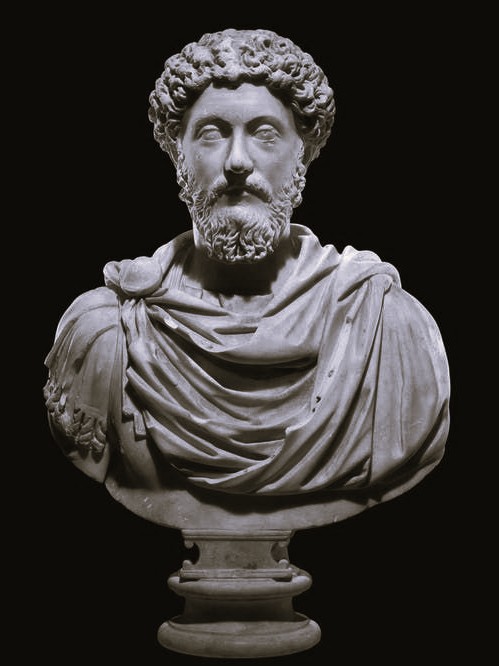
Marcus Aurelius is probably the clearest example of the difference. His Meditations is full of reminders about impermanence, judgment, duty, death, other people, and the need to correct one's own thinking. The book was not written as a polished self-help manual. It was a private practice of moral self-examination: an emperor repeatedly reminding himself that power, reputation, comfort, and even life itself are not the things that make a person good.
The Stoicism Everyone Knows
There is a reason the modern version is so attractive. “Control what you can control” is short, memorable, and useful when life becomes chaotic. If a colleague dislikes you, a client changes their mind, an application gets rejected, or an outcome depends on other people's decisions, the advice offers an immediate way to stop spiraling. Focus on your own judgment and action instead.
The problem is that this slogan can make Stoicism sound like a technique for becoming psychologically efficient. Ancient Stoics were doing something much larger. They were asking what human beings are for, what counts as genuinely good or bad, how emotions arise, how freedom works within a causally ordered world, and what obligations we have toward other people. Their ethics was embedded in a broader philosophical system rather than designed as a collection of coping tricks.
That difference matters because the Stoic conclusion is more radical than “don't stress about things you cannot control.” The Stoics argued that we routinely mistake external things—wealth, status, pleasure, health, reputation, even survival—for goods that can make a life better. The Stoic project begins when we question that assumption itself.
“The ancient Stoic question is not simply ‘Can I control this?’ It is ‘What kind of person should I be in this situation?’”
What “Control What You Can” Actually Means
The popular slogan points toward a genuine Stoic distinction. Epictetus famously separates things that are “up to us” from things that are not. Our judgments, choices, intentions, and responses belong to the first category. Other people's opinions, bodily conditions, social status, possessions, and eventual outcomes do not belong to us in the same way.
But there is a crucial philosophical step that gets lost in the modern version. The Stoic does not merely say that external events are difficult to control. The deeper claim is that they do not determine whether a person is morally good. Losing your job can be painful. Being insulted can be unpleasant. Becoming ill can be frightening. Yet none of those events, by themselves, makes you unjust, cowardly, dishonest, or vicious.
For the Stoics, the decisive question is therefore not “Did I get the result I wanted?” but “Did I judge and act well?” You can fail while acting virtuously, and you can succeed while acting badly. That is why Stoic ethics cannot be reduced to outcome management. The external result matters in practical life, but it does not determine the moral worth of the person who responds to it.
The Part Self-Help Stoicism Usually Leaves Out: Virtue
The Stoic claim that virtue is the only true good sounds extreme because modern culture normally treats many external achievements as obvious goods. We want health, money, security, recognition, relationships, education, and success. The Stoics did not deny that these things can be preferred. Their claim was that possessing them does not by itself make someone good.
Virtue, by contrast, concerns the quality of one's rational agency. Classical Stoicism emphasizes wisdom, justice, courage, and self-control. These are not productivity traits. They are standards for judging whether one's choices are appropriate. A person who wins an argument through deception has achieved an external victory while failing ethically. A person who loses an argument but remains honest and fair may have failed externally while succeeding in the more important sense.
This is where the ancient philosophy becomes much less comfortable than the motivational version. Stoicism does not promise that philosophical practice will make you successful. It asks whether you would still choose justice, honesty, courage, and rational judgment if success were unavailable as a reward.
Why Stoicism Is Not Simply Emotional Suppression
The stereotype of a Stoic is someone who feels nothing. That is misleading. The Stoics developed a sophisticated account of emotions, treating destructive passions as connected to judgments about what is good or bad. Fear, excessive distress, and irrational desire are not merely bodily sensations that must be crushed. They involve ways of valuing what happens to us.
This is why Stoic practice often takes the form of examining an impression before assenting to it. Something happens; an immediate appearance presents itself as important; the mind has an opportunity to examine that appearance. Is the event actually good or bad in the moral sense? Is the judgment proportionate? Have I added a story that is not contained in the event itself?
None of this means that Stoicism is an easy theory of emotion. In fact, the ancient Stoic position is demanding precisely because it links emotional transformation to changes in judgment. Simply telling yourself to “calm down” is not the same thing as changing the evaluative beliefs that produced the disturbance in the first place.
What Marcus Aurelius Was Actually Doing in Meditations
Marcus Aurelius makes more sense when Meditations is read as a record of philosophical practice rather than as a book of inspirational quotations. He repeatedly addresses himself, reminds himself of doctrines, anticipates moral failures, and tries to correct his reactions. The repetition is part of the point. He was not presenting Stoicism to beginners; he was rehearsing principles he already knew because knowing a doctrine and living according to it are different achievements.
His position as emperor makes the exercise particularly revealing. Marcus possessed extraordinary political power, but his writing repeatedly reminds him not to become corrupted by that power. He reflects on justice, the common nature of humanity, the transience of fame, the insignificance of death, and the need to treat difficult people as fellow human beings rather than as obstacles.
That is why Meditations often sounds less like a declaration of certainty than a series of corrections. Marcus knew the Stoic ideal. The difficulty was embodying it. The philosophical work was therefore repetitive and practical: remember the principle, notice the failure, correct the judgment, and try again.
Stoicism Was Also About Other People
The internet version of Stoicism can become intensely individualistic: protect your peace, ignore everyone else's opinion, focus on yourself. Ancient Stoicism is much more social than that. Stoic ethics treats human beings as rational and social creatures whose lives are connected. Justice is not an optional extra added after personal resilience.
Marcus repeatedly reminds himself that other people are part of the same human community. His response to difficult people is therefore not simply to become indifferent to them. He tries to understand them, correct himself, act justly, and remember that another person's bad behavior does not authorize him to become unjust in return.
This creates an important correction to modern “protect your peace” rhetoric. Sometimes the Stoic response to conflict is not withdrawal. It may be patience, honest criticism, forgiveness, duty, or courageous action. The question is not “How do I avoid discomfort?” It is “What does justice require from me here?”
Why Death Matters So Much to the Stoics
Death appears constantly in Marcus Aurelius because Stoicism treats mortality as a philosophical test of value. If life is temporary, then reputation, possessions, status, and bodily pleasure cannot be the foundation of a good life. They can matter to us, but they cannot be the ultimate standard by which we judge ourselves.
This is not an argument that death is pleasant or that grief is meaningless. It is an argument about perspective. Human beings often build enormous psychological structures around things that are temporary. Stoic reflection on death attempts to expose that instability so that a person can direct attention toward what remains morally significant: how they judge, choose, and treat others while they are alive.
The result is less cheerful than many modern Stoic memes suggest. Stoicism asks you to confront impermanence rather than distract yourself from it. Marcus uses mortality not to escape life but to make his conduct within life more serious.
Where Modern Stoicism Gets It Right—and Where It Changes the Philosophy
Modern readers are not wrong to find Stoic practices useful. Distinguishing between one's own choices and external outcomes can reduce pointless rumination. Examining first impressions can make reactions less impulsive. Remembering that status and reputation are unstable can weaken the need for constant approval.
The problem begins when these practices are detached from the ethical framework that gave them meaning. “Control what you can” becomes very different if the goal is merely to become more productive. Ancient Stoicism would ask what your productivity is for. If efficiency helps you deceive customers, exploit employees, or sacrifice justice for profit, Stoic language about discipline cannot rescue the project.
The same applies to resilience. Being able to tolerate hardship is not automatically virtuous. A cruel person can be extremely resilient. A dishonest politician can have extraordinary self-control. Stoicism demands that resilience be governed by virtue, especially justice and wisdom. The ability to endure is not the same thing as the ability to live well.
The Limits of the “Control” Slogan
There is also a practical danger in using the control distinction carelessly. Human beings do influence one another, institutions, and circumstances. We are not isolated minds floating above the world. Political action, friendship, education, collective organizing, and moral responsibility all involve trying to change things outside one's immediate control.
A better reading of the Stoic distinction is therefore not “never try to change external things.” It is “do not make your moral worth or inner stability depend entirely on an external outcome.” You can campaign for a just policy without believing that victory is guaranteed. You can care for someone who is ill without believing that your effort gives you control over their recovery. You can work toward success while recognizing that success is not the final measure of your character.
That distinction preserves agency without pretending that the world is obedient to our intentions. It is also one reason Stoicism remains philosophically interesting: it tries to explain how a person can act seriously in an uncertain world without making certainty a condition of action.
So What Does Stoicism Actually Ask of You?
Strip away the Roman statues, motivational graphics, and productivity slogans, and Stoicism leaves you with a much harder assignment. Examine your judgments. Learn to distinguish genuine goods from things that merely look valuable. Act justly even when doing so is inconvenient. Accept that outcomes are not fully yours. Treat other people as fellow human beings rather than as instruments. Remember that your life is temporary.
And perhaps most importantly, stop treating philosophy as something you merely know. For the Stoics, philosophy was a way of life. The point was not to possess a collection of impressive ideas about resilience. The point was to become the kind of person whose judgments and actions increasingly reflect those ideas.
That is why Marcus Aurelius is still worth reading. Meditations is not a manual for becoming invulnerable. It is evidence of someone who knew the Stoic arguments and still had to remind himself of them. The interesting question is not whether Marcus ever became perfectly calm. It is whether philosophical practice can actually change the way a person lives.
Frequently Asked Questions
Is Stoicism really about controlling what happens to you?
No. The Stoics distinguish between what is up to us—especially our judgments, choices, and responses—and things outside our control. The aim is not to control external events but to govern our own judgments and actions while responding intelligently to circumstances.
Does Stoicism mean suppressing emotions?
Not in the simple sense of pretending not to feel. Classical Stoic ethics treats destructive passions as connected with mistaken judgments about value. Stoic practice therefore aims at correcting judgments and developing rational, appropriate responses rather than merely hiding emotion.
What did Marcus Aurelius mean by living well?
For Marcus, living well means acting according to human nature and virtue. Justice, self-command, courage, and rational judgment matter more to a good life than wealth, status, reputation, comfort, or other external advantages.
Was Meditations written for publication?
No. Marcus Aurelius wrote Meditations as private philosophical exercises directed toward his own moral improvement. Its aphoristic, repetitive, self-addressed style reflects that purpose.
Did the Stoics believe everything was predetermined?
Stoic physics was strongly deterministic: events were understood within a rational causal order. At the same time, Stoics developed an account of human agency in which our own rational responses and judgments are part of that causal order rather than something outside it.
Is modern self-help Stoicism the same as ancient Stoicism?
Not necessarily. Modern writers often borrow Stoic practices such as focusing on what is within one's control, but ancient Stoicism was a comprehensive philosophy involving ethics, logic, and physics. Its central ethical claim was that virtue, rather than productivity, achievement, or emotional toughness, is what makes a life good.
Further Reading
For a scholarly introduction to Marcus Aurelius and Stoicism, see the Stanford Encyclopedia of Philosophy: Marcus Aurelius and its overview of Stoicism.