An AI assistant can recommend what to buy, suggest what to write, rank which option looks best, plan a journey, summarize an argument, or even tell you what it thinks you should do. The more capable these systems become, the more tempting one question becomes: if a machine can make the decision easier, can it also make the responsibility easier to escape?
Sartre never wrote about artificial intelligence, algorithms, smartphones, or recommendation systems. The connection developed in this essay is therefore a contemporary philosophical interpretation of Sartrean ideas, not a claim about what Sartre literally said about modern technology.
Jean-Paul Sartre's philosophy begins with an unsettling idea: human beings do not arrive in the world with a completely predetermined definition of what they are. In the famous formula associated with existentialism, existence precedes essence. A human being exists first and only subsequently becomes someone through the projects, commitments, relationships, and choices that make up a life.
That idea is often presented as a celebration of freedom. Sartre's position is more demanding than that. Freedom is not simply the pleasant ability to pick between several attractive possibilities. It also means confronting the fact that no predetermined essence, divine instruction, social role, or external authority can completely take over the work of deciding what one's life means.
That is where the connection with artificial intelligence becomes interesting. An AI system does not have to literally take control of a person's life in order to change the experience of choosing. It can narrow possibilities, recommend one option over another, supply a ready-made justification, or make a difficult decision feel as though it has already been settled.
The philosophical question is therefore not simply whether AI makes people less free. A more precise question is: what happens when we begin treating an external system as the author of decisions for which we remain the agents?
Existentialism
Existence Before Essence
Sartre's phrase "existence precedes essence" is easy to misunderstand. It does not mean that human beings are completely undefined, that circumstances do not matter, or that anyone can become absolutely anything simply by wanting it. Sartre's point concerns the absence of a predetermined human essence that settles in advance what each person must become.
A manufactured object provides a useful contrast. A knife is designed for a purpose before it is produced. Its intended function helps explain what kind of thing it is. Sartre uses this contrast to ask what happens when we apply the same model to human beings. If there is no predetermined human blueprint that settles the meaning of an individual life, then identity cannot simply be read off from a fixed essence.
Human beings instead exist within concrete situations and project themselves toward possibilities. A person's past matters. Their body matters. Their relationships, social position, material circumstances, and history matter. But none of these facts, taken by themselves, exhaust what the person is capable of meaningfully becoming.
This tension is central to Sartre's distinction between facticity and transcendence. Facticity refers to the given features of a situation: the past that has already happened, the body one inhabits, the circumstances one finds oneself in. Transcendence refers to the capacity to move beyond simply being identical with those facts by interpreting them, projecting possibilities, and acting toward ends.
You are neither simply what has happened to you nor completely independent of it.
That distinction matters enormously for the AI question. An AI system can know things about your situation. It can process your previous choices, identify patterns, compare alternatives, and predict what might happen next. But a description of your circumstances is not automatically an answer to the philosophical question of what you should choose.
Freedom & Responsibility
Why Freedom Produces Anguish
Freedom sounds attractive until Sartre asks what it feels like to recognize its consequences. If no predetermined essence tells you exactly what you must become, then choosing becomes unavoidable. There may be excellent reasons for choosing one path rather than another, but reasons do not mechanically remove the responsibility of deciding which reasons to act upon.
Sartre calls the experience of confronting this responsibility anguish. This is not simply ordinary fear. Fear has an object: a person may fear failure, illness, rejection, or physical danger. Existential anguish is different. It concerns the recognition that there is no external mechanism capable of making the choice completely for you.
This is why Sartre's famous expression that human beings are "condemned to be free" is deliberately paradoxical. Freedom is not presented as an optional privilege that can be accepted when pleasant and rejected when inconvenient. The individual remains responsible for how they take up their situation even when that situation is difficult.
The attraction of decision-support technology becomes clearer here. When choosing is exhausting, having something else produce an answer can feel like relief. The philosophical danger is not that relief is inherently wrong. The danger begins when relief from the difficulty of choosing becomes confused with relief from responsibility itself.
Bad Faith and the Desire to Escape Responsibility
Sartre's concept of bad faith is often reduced to the phrase "lying to yourself." That captures part of the idea, but it misses the deeper structure. Bad faith involves a distortion of the relationship between facticity and transcendence: a person treats themselves as though they were nothing more than a fixed thing, or conversely pretends that their freedom makes concrete limitations irrelevant.
The first version is particularly important for understanding responsibility. Someone might say, "That's simply who I am," as though a past pattern had become an unchangeable essence. But Sartre's point is that a person's history is real without being the complete definition of their future. The past belongs to their facticity, but they are not merely their past.
The opposite error is just as important. Sartrean freedom does not mean that circumstances disappear whenever we want them to. Pretending that every limitation can be overcome by sheer intention would also distort the relationship between freedom and situation.
Sartre's account is therefore more balanced than the popular slogan that "you can always choose." His position is closer to this: you always encounter a situation, but you are not simply identical with the situation. Bad faith appears when either side of that relationship is denied.
The Café Waiter and the Fiction of a Fixed Self
Sartre's famous café-waiter example makes this abstract idea concrete. He describes a waiter whose movements and manner seem almost too perfectly adapted to the role of waiter. The performance is so complete that the person appears to be nothing beyond the social function being performed.
Sartre is not claiming that the person is not actually a waiter. The role is real. The person's workplace, responsibilities, habits, and social circumstances are part of their facticity. The problem arises when the individual treats the role as though it completely determines what they are.
The waiter is both a waiter and more than the identity "waiter" captures. The same structure appears in other roles: employee, student, parent, professional, citizen, success, failure. A role can describe something real without becoming a complete metaphysical explanation of the person inhabiting it.
Now replace the phrase "I am only a waiter" with "the system decided for me." The analogy becomes visible. The external authority changes, but the psychological structure may remain similar: something outside the self is treated as though it has transformed an open responsibility into a settled fact.
AI & Decision-Making
What AI Changes About Choosing
Traditional tools generally require a person to formulate the purpose of an action. A calculator performs a calculation. A map helps determine a route. A search engine retrieves information. These tools can profoundly affect what a person knows and does, but the user ordinarily remains visibly involved in constructing the final judgment.
Generative and recommendation-based AI introduces a more complicated relationship. Instead of merely returning information, an AI system can synthesize possibilities and present a conclusion in a form that resembles judgment. It can say which option appears preferable, which argument is stronger, which message sounds more appropriate, or which plan appears most efficient.
None of this automatically makes AI philosophically problematic. Human beings have always relied on other people, institutions, books, instruments, experts, and advice. There is no Sartrean principle that says responsible people must make every decision without assistance.
The interesting issue is the moment at which assistance changes into psychological substitution. There is a difference between saying, "Here are several arguments; I will decide what to do," and saying, "The AI told me what to do, so the decision is no longer mine."
Assistance Is Not the Same as Delegation
Consider four increasingly strong forms of AI involvement. First, the system can provide information. Second, it can organize that information into options. Third, it can recommend one option. Fourth, a person can allow the recommendation to function as the practical decision without independently considering whether to accept it.
These stages are not morally or philosophically identical. If an AI system explains several possible interpretations of a philosophical text, the user remains responsible for deciding which interpretation is convincing. If an AI recommends a laptop, the user can still examine price, specifications, needs, and alternatives before buying it.
The problem becomes more interesting when the recommendation is treated as an authority rather than evidence. "The system calculated that this is best" sounds objective, but "best" always depends on a criterion. Best for speed? Cost? Convenience? Safety? Popularity? Long-term value? The system may optimize a target without deciding whether that target is the one the person ought to value.
This is where Sartre's philosophy becomes useful. A recommendation can influence a choice without becoming the metaphysical author of that choice. The person still has to decide what significance the recommendation has within their situation.
A recommendation can influence your choice without becoming your responsibility for choosing.
When Algorithms Narrow the Choice Space
There is, however, a deeper problem than simply asking whether a person accepts an AI recommendation. Modern recommendation systems can shape the field of possibilities before a conscious decision is even made.
Consider an online store. A person may technically be free to choose among thousands of products, but the interface does not present thousands of products equally. It ranks, filters, recommends, hides, groups, and highlights. The person encounters a structured choice environment rather than a neutral catalogue.
The same pattern can appear in entertainment, news, social media, employment systems, financial services, education, and increasingly personal productivity. The issue is not that algorithms necessarily eliminate freedom. Rather, they can participate in determining which possibilities become salient to a person in the first place.
This makes the philosophical question more subtle. Freedom does not require an infinite number of options. Human beings always operate within constraints. But if a person stops noticing how a technological system structures the possibilities available to them, the system can become part of the unnoticed background against which choices acquire their meaning.
Sartre's emphasis on situation is especially useful here. We never choose from nowhere. We choose from within a world already containing institutions, expectations, technologies, relationships, histories, and material conditions. Contemporary AI can therefore be understood not simply as another "choice" but as part of the situation in which choosing occurs.
Could AI Become a Form of Bad Faith?
The answer is not simply yes. Using AI is not inherently an act of bad faith, and refusing to use AI is not automatically an act of authenticity. Sartre's concept concerns how a person relates to their freedom and situation, not which technologies they happen to use.
A Sartrean interpretation becomes relevant when the technology is used as a way of disguising responsibility. Imagine someone making an important decision and later saying, "I had no choice. The AI recommended it." The statement might be literally false if the person had alternatives and consciously accepted the recommendation.
The problem would not be the recommendation itself. The problem would be the attempt to convert a choice into a fact. The person is treating their own decision as though it were something that simply happened to them.
But the reverse error is also possible. Someone could become so convinced that they are perfectly autonomous that they ignore the influence of the systems surrounding them. That too would be a distortion. Sartre's distinction between facticity and transcendence gives us reason to avoid both extremes: neither "the algorithm made me do it" nor "the algorithm has no influence on me" adequately describes the situation.
This is why the phrase "AI is bad faith" would be too crude. A more defensible claim is that AI can create new opportunities for bad faith when people use its authority to obscure their continuing responsibility for accepting, rejecting, or interpreting its recommendations.
Sartre's Freedom Was Never Purely Unlimited
One of the easiest mistakes in popular discussions of Sartre is to interpret existential freedom as unlimited practical power. That is not the strongest reading of his philosophy.
Sartre's human being is always situated. A person's past cannot simply be erased. Their body imposes conditions. Other people have their own freedom. Social and historical circumstances affect what possibilities are realistically available. Material conditions can restrict what someone can actually accomplish.
Freedom therefore should not be confused with omnipotence. The philosophical issue is not whether a person can produce any outcome whatsoever. It is how a person takes up the situation in which they find themselves and acts toward possibilities within it.
This qualification makes the AI analogy much stronger. An algorithm can genuinely constrain a person's practical options. An institution can require the use of automated systems. A recommendation can be embedded in a workflow where rejecting it carries a cost. A person can therefore face technological constraints that are not reducible to personal preference.
Sartre's philosophy does not require us to deny those constraints. Instead, it asks us to distinguish between acknowledging a constraint and treating the constraint as a complete explanation of ourselves. Contemporary interpretations of Sartre emphasize precisely this relationship between freedom and the concrete situation in which freedom is exercised.
The Deeper Problem: Outsourcing Judgment
The most interesting consequence of AI-assisted decision-making may therefore have little to do with whether machines become "more intelligent" than their users. The deeper issue is whether people gradually become less practiced at judging for themselves.
Judgment is not simply the ability to obtain an answer. It includes deciding which considerations matter, identifying what one's goals actually are, recognizing when a recommendation is inappropriate, and accepting responsibility for the consequences of acting on a decision.
An AI system can be extremely useful precisely because it reduces the effort required to perform some of these tasks. But reducing effort and eliminating responsibility are two different things. A person can delegate calculation without delegating the significance of the result.
This distinction matters especially when the question is not purely factual. "Which route is fastest?" can be treated largely as an optimization problem. "Which career should I pursue?" is different. "Should I forgive this person?" is different again. "What kind of life should I live?" is not simply a question waiting for a sufficiently powerful database.
The more a question depends on values, commitments, relationships, and the meaning a person gives to their own life, the less plausible it becomes to treat an external recommendation as though it were the final author of the answer.
The philosophical lesson is not "never ask AI." It is closer to: do not confuse receiving an answer with having answered the question of what matters.
What We Should Not Put Into Sartre's Mouth
It would be easy to turn this essay into a futuristic quotation machine: Sartre "would hate AI," Sartre "would call ChatGPT bad faith," or Sartre "predicted algorithmic society." None of these claims can be established because Sartre died decades before contemporary artificial intelligence existed in its present form.
A responsible philosophical comparison has to preserve the difference between historical interpretation and contemporary application. Sartre gives us concepts — freedom, facticity, transcendence, anguish, bad faith, responsibility, and situated action — that can be used to interrogate a new technological environment. He does not give us a ready-made philosophy of artificial intelligence.
That distinction actually makes the comparison more interesting. Philosophy does not become useful only when an old thinker predicted the future correctly. A philosophical framework can remain valuable because it gives us concepts with which to ask questions that its author could never have encountered.
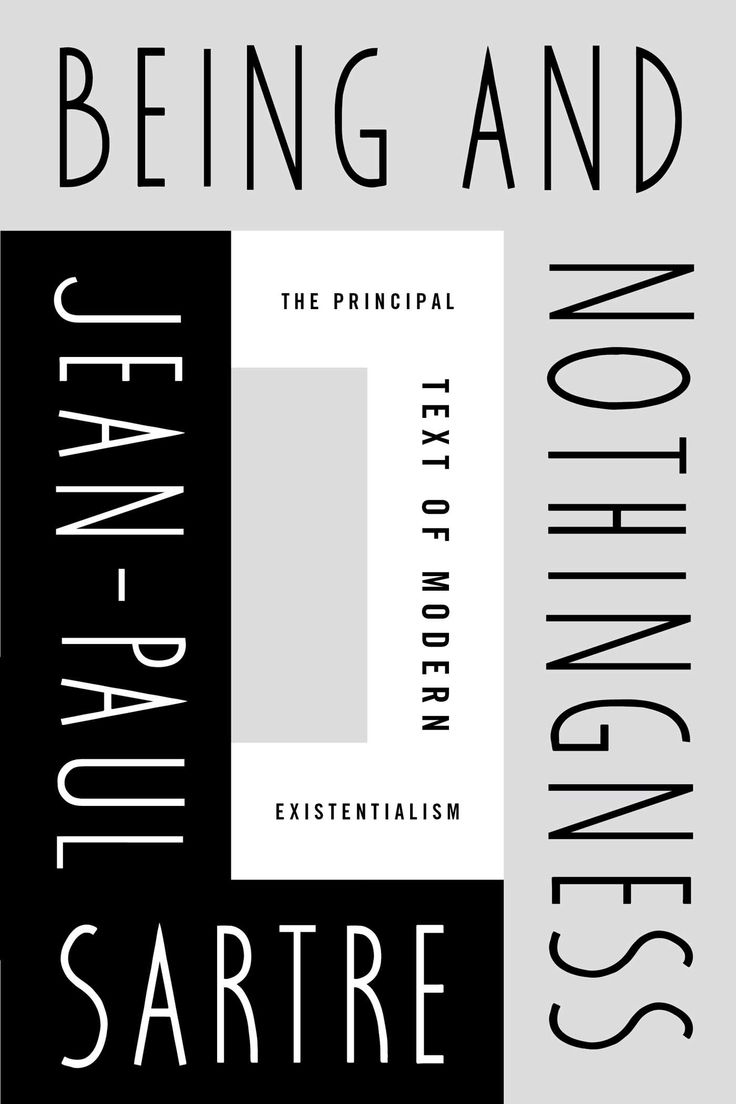
AI is therefore not a hidden chapter of Being and Nothingness. It is a new situation through which some of Sartre's old questions can be tested.
The Choice That Remains
Sartre's philosophy does not require us to reject tools, advice, expertise, or technology. Human beings have always depended on things outside themselves. The interesting question is what happens when the tool begins to occupy the psychological position of an authority that appears to decide on our behalf.
An AI can tell you what option it predicts will work best. It can explain why. It can compare thousands of alternatives in seconds. It can even produce a recommendation that is much better informed than the one you would have produced alone.
None of that settles the final philosophical question: what significance does that recommendation have for you?
You may accept it. You may reject it. You may modify it. You may decide that the system optimized the wrong objective. You may decide that the most efficient option is not the most valuable one. Or you may conclude that the question itself was framed incorrectly.
That is where the Sartrean problem returns. The machine can participate in the situation. It can influence what appears possible. It can reshape the information available to you. But the presence of an external recommendation does not automatically transform your relationship to the choice into someone else's responsibility.
Perhaps that is the most useful way to bring Sartre into the age of AI. Not by asking whether he would have approved of our technology, but by asking a more uncomfortable question: when a machine offers to choose for us, are we using it to think more carefully — or using it to avoid thinking that the choice was ours?
Frequently Asked Questions
What does Sartre mean by "existence precedes essence"?
Sartre's phrase means that human beings do not begin with a fixed essence or predetermined purpose that completely defines what they will become. Human beings exist within concrete situations and continually constitute themselves through projects, choices, and actions.
What is anguish in Sartre's philosophy?
Anguish is the unsettling awareness of freedom and responsibility. It arises when a person recognizes that no external authority can completely remove responsibility for the choices through which they shape their existence.
What is bad faith in Sartre's philosophy?
Bad faith is a form of self-deception in which a person denies or distorts the tension between freedom and the concrete facts of their situation. A person can treat themselves as completely determined by circumstances, or make the opposite mistake of pretending that real constraints do not matter.
Is using AI automatically bad faith?
No. Using AI for information, comparison, brainstorming, or recommendations is not automatically bad faith. The Sartrean issue arises when someone uses the system's authority to pretend that they no longer bear responsibility for accepting or rejecting its recommendation.
Does Sartre believe people can choose anything they want?
No. Sartrean freedom should not be confused with unlimited practical power. Human beings always act within concrete situations involving their bodies, histories, relationships, institutions, and material circumstances. Freedom concerns how a person takes up and acts within a situation rather than the ability to erase every constraint.
What does Sartre's café-waiter example mean?
Sartre's waiter illustrates the danger of identifying completely with a social role. Being a waiter is a real fact about the person's situation, but it does not exhaust what the person is. Treating the role as though it completely determines the self can become a denial of freedom.
Did Sartre ever write about artificial intelligence?
No. Sartre died in 1980, long before contemporary generative AI and algorithmic recommendation systems. Any connection between Sartrean existentialism and AI is therefore a contemporary philosophical application of his ideas rather than a historical statement about technology he personally encountered.