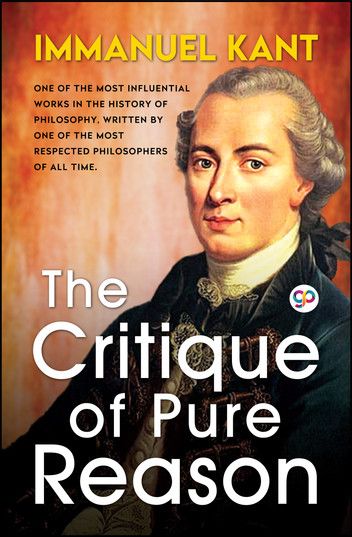
The sentence that usually introduces Kant's ethics is famously dense: "Act only according to that maxim whereby you can at the same time will that it should become a universal law." It appears in the Groundwork of the Metaphysics of Morals (1785), where Kant is looking for a fundamental principle capable of grounding moral obligation. The idea is not simply "do what would work if everyone did it." Kant is asking a more demanding question about the rational principle on which an action is based.
That distinction matters. Kant does not make morality depend primarily on consequences, personal preferences, or the amount of happiness an action produces. His moral theory is built around duty, the authority of practical reason, and the autonomy of rational agents. The categorical imperative is the name he gives to the fundamental moral requirement that follows from this picture.
What Is the Categorical Imperative?
An imperative is a command: it tells an agent what they ought to do. Kant distinguishes between hypothetical and categorical imperatives. A hypothetical imperative has the form "If you want X, do Y." For example, if you want to pass an exam, you have reason to study. Its force depends on an end you have adopted.
A categorical imperative is different because it does not depend on a particular desire or goal. It binds unconditionally. For Kant, moral requirements have this structure: you cannot make the duty not to deceive disappear simply by deciding that you would rather benefit from deception. The categorical imperative is therefore not a strategy for achieving something else; it is supposed to express the basic form of moral obligation itself. citeturn0search0
First, Find the Maxim Behind the Action
This is where many simplified explanations go wrong. Kant does not ask you to universalize a bare description such as "I am lying" or "I am borrowing money." He asks you to identify the maxim—the practical principle on which you are choosing to act.
A useful simplified structure is: in these circumstances, I will do this in order to achieve this end. The maxim captures the agent's policy or principle of action. Two people can perform outwardly similar actions while acting on different maxims, which matters because Kant's test concerns the agent's principle rather than the movement of the body alone. citeturn0search1
A simple maxim
Suppose someone says: "I will make a promise I do not intend to keep whenever doing so helps me get money."
The morally relevant object is not merely the promise. It is the policy of making a deceptive promise under those circumstances for that purpose.
Then Universalize It
Once the maxim is clear, Kant's first formulation asks you to consider it as a universal law. That does not mean asking whether you personally would like a world in which everyone behaved this way. It means considering what happens when the same principle is treated as a law applying to everyone in relevantly similar circumstances.
Kant's procedure is often reconstructed in four stages: formulate the maxim; universalize it; ask whether the universalized maxim can be conceived without contradiction; and, where it can be conceived, ask whether a rational agent could will that world. The details of how exactly these tests work are debated among Kant scholars, so the popular slogan "just imagine everyone doing it" is an important simplification, not the whole theory. citeturn0search0
The Classic Example: The False Promise
Kant's famous example involves someone who needs money and considers making a promise to repay it while already knowing that the promise will not be kept. The proposed maxim is roughly: when I need money, I will make a deceptive promise if doing so will get me out of difficulty.
- Formulate the maxim. The action is not simply "make a promise"; it is making a promise deceptively for a particular purpose.
- Universalize it. Imagine the maxim as a universal law governing relevant cases for everyone.
- Test whether it can be conceived. If deceptive promising were universally established, the practice of relying on promises in these circumstances would be undermined.
- Test whether it can be willed. Kant then considers whether a rational agent could will such a universal law rather than merely wanting the benefits of the maxim for themselves.
The important point is that the maxim appears to depend on a practice that its universalization would undermine. If everyone acted on the deceptive-promising policy, the institution of promising could no longer perform the role the individual maxim relies upon. Kant therefore treats the maxim as failing the universal-law test. citeturn0search0turn0search4
Two Different Kinds of Failure
Kant's examples are often explained through two forms of contradiction. A contradiction in conception occurs when universalizing a maxim undermines the very practice or possibility that the maxim relies upon. The false-promise case is the standard example.
A contradiction in will is different. Here the universalized maxim may be conceivable, but a rational agent could not consistently will it as a universal law because doing so would conflict with necessary ends or conditions of rational agency. Kant uses the example of refusing to cultivate one's talents. The distinction is important because Kant's ethics is not exhausted by asking whether universalized behaviour would "collapse."
Why the Categorical Imperative Is Not Just the Golden Rule
The comparison is tempting because both principles ask us to move beyond our immediate perspective. But they are not the same test. The Golden Rule is commonly expressed in terms of how one would want to be treated. Kant's universal-law formulation instead asks whether the maxim of an action can be willed as a universal law.
That difference reflects Kant's deeper commitment to reason rather than personal preference as the basis of morality. The moral question is not whether I would tolerate an action happening to me. It is whether the principle on which I act could be justified as a universal practical law. Kant's project is therefore much closer to a theory of rational moral legislation than to a rule about reciprocal treatment. citeturn0search0turn0search9
Kant Is Not Only Asking What You Do—But Why
The categorical imperative also helps explain why duty is so important in Kant's ethics. An action can be outwardly consistent with duty while being performed for a completely different reason. Kant is interested in the principle that determines the will, not merely in whether the behaviour happens to produce the right-looking result.
This is connected to autonomy. For Kant, autonomy does not mean doing whatever you feel like doing. It means that a rational will is governed by a law it can regard as rationally binding on itself. Moral freedom therefore has a paradoxical structure: you are free not because you escape all rules, but because you can act according to principles that reason gives itself rather than simply being pushed around by desire. citeturn0search0turn0search3
A useful distinction
Hypothetical: "If I want to get fit, I should exercise."
Categorical: "I have a moral duty that does not depend on whether I happen to want the goal."
The first depends on an adopted end. The second is supposed to bind the rational agent unconditionally.
The Categorical Imperative Has More Than One Formulation
Another reason the theory can look confusing is that Kant gives several formulations of the categorical imperative. They are not meant to be separate moral theories. Kant presents them as different ways of expressing the same fundamental moral law.
The Formula of Universal Law focuses on whether your maxim can be universalized. The Formula of Humanity tells us to treat humanity, in oneself and others, always as an end and never merely as a means. Kant also develops the idea of a Kingdom of Ends, a systematic community of rational beings who legislate universal moral laws. Together, these formulations reveal that Kant's ethics is about more than avoiding contradictions: it is also about the equal moral standing and rational agency of persons. citeturn0search2turn0search3
The Difficult Case of Lying
Kant's strict position on lying is one reason his ethics continues to provoke debate. In his 1797 essay On a Supposed Right to Lie from Philanthropy, Kant rejected the idea that a person has a right to lie even in the famous case involving a murderer asking where a victim is hiding.
This is not simply a matter of Kant failing to notice that lying can have good consequences. His framework deliberately refuses to make moral permissibility depend solely on consequences. For Kant, the moral law places limits on the principles we may adopt, even when breaking those limits appears useful in a particular case. The conclusion is famously controversial, but it exposes the central commitment of his theory: morality is not supposed to change whenever the expected outcome changes.
Why the Categorical Imperative Still Matters
Kant's theory remains influential because it asks a question that survives beyond eighteenth-century examples: Can I justify the principle of my action as something that others could also rationally act on? That question shifts attention away from convenience and toward consistency, justification, and respect for persons.
It also explains why Kantian ethics is often classified as deontological. The rightness of an action is connected to duty and the principle on which the agent acts, rather than being determined solely by the consequences produced. Later philosophers have challenged, revised, and developed Kant's framework, but the basic problem remains recognizable whenever we ask whether a rule should apply to everyone or whether we are quietly making an exception for ourselves.
The categorical imperative, then, is not simply a complicated sentence to memorize. It is an attempt to answer one of moral philosophy's hardest questions: what would it mean for a moral rule to bind us because it is rationally justifiable, rather than because it happens to serve our interests?
Frequently Asked Questions
What is Kant's categorical imperative in simple terms?
It is Kant's unconditional principle of morality: act only on a maxim that you can rationally will as a universal law. The test asks whether the rule behind your action could consistently be adopted by everyone.
What is a maxim in Kant's ethics?
A maxim is the principle or policy on which an agent acts. It describes what the person is doing in the relevant circumstances and for the purpose or end they have in acting.
What does Kant mean by universalizing a maxim?
It means considering the maxim as a universal law applying to everyone in relevantly similar circumstances, then asking whether the maxim can be conceived and willed consistently in that universalized form.
What is the false-promise example?
Kant considers someone who makes a promise without intending to keep it in order to obtain money. If the relevant maxim were universalized, the practice of promising would be undermined, so the maxim cannot function as a universal law.
Is the categorical imperative the same as the Golden Rule?
No. The Golden Rule is commonly framed around how one would want to be treated, whereas Kant's universal-law formulation tests whether the maxim of an action can be willed as a universal law. Kant's test is grounded in rational universality rather than personal preference.
Did Kant think lying is always wrong?
Kant defended a very strict prohibition on lying. In his 1797 essay On a Supposed Right to Lie from Philanthropy, he argued against a supposed right to lie even in the famous murderer-at-the-door case. The position remains controversial.
Further Reading
For a more technical treatment of Kant's moral philosophy and the universal-law formulation:
- Stanford Encyclopedia of Philosophy — Kant's Moral Philosophy
- Stanford Encyclopedia of Philosophy — Kant's Account of Reason
- Stanford Encyclopedia of Philosophy — Kant's Social and Political Philosophy
This article is an introductory explanation, not a substitute for reading Kant's Groundwork of the Metaphysics of Morals. Interpretations of the categorical imperative differ, especially concerning the precise mechanics of universalization.
Before asking whether an action benefits you, ask whether the principle behind it is one you could rationally accept as a law for everyone.