The Deal Hobbes Puts on the Table
Imagine someone sits you down and offers you a contract. Sign it, and you will gain a common authority capable of making and enforcing rules, settling disputes, and protecting you against other people. In return, you must give up much of the freedom you would possess if there were no political authority at all. The sovereign will have the final say over public law, and you cannot simply withdraw your political obedience whenever a decision displeases you.
Most people's first reaction is probably refusal. It sounds less like a contract than a surrender. But that reaction makes sense only if we compare Hobbes's proposal with the relatively stable political societies most of us already know. Hobbes wants us to compare political government with something much more unsettling: a condition in which there is no common power capable of reliably restraining everyone else.
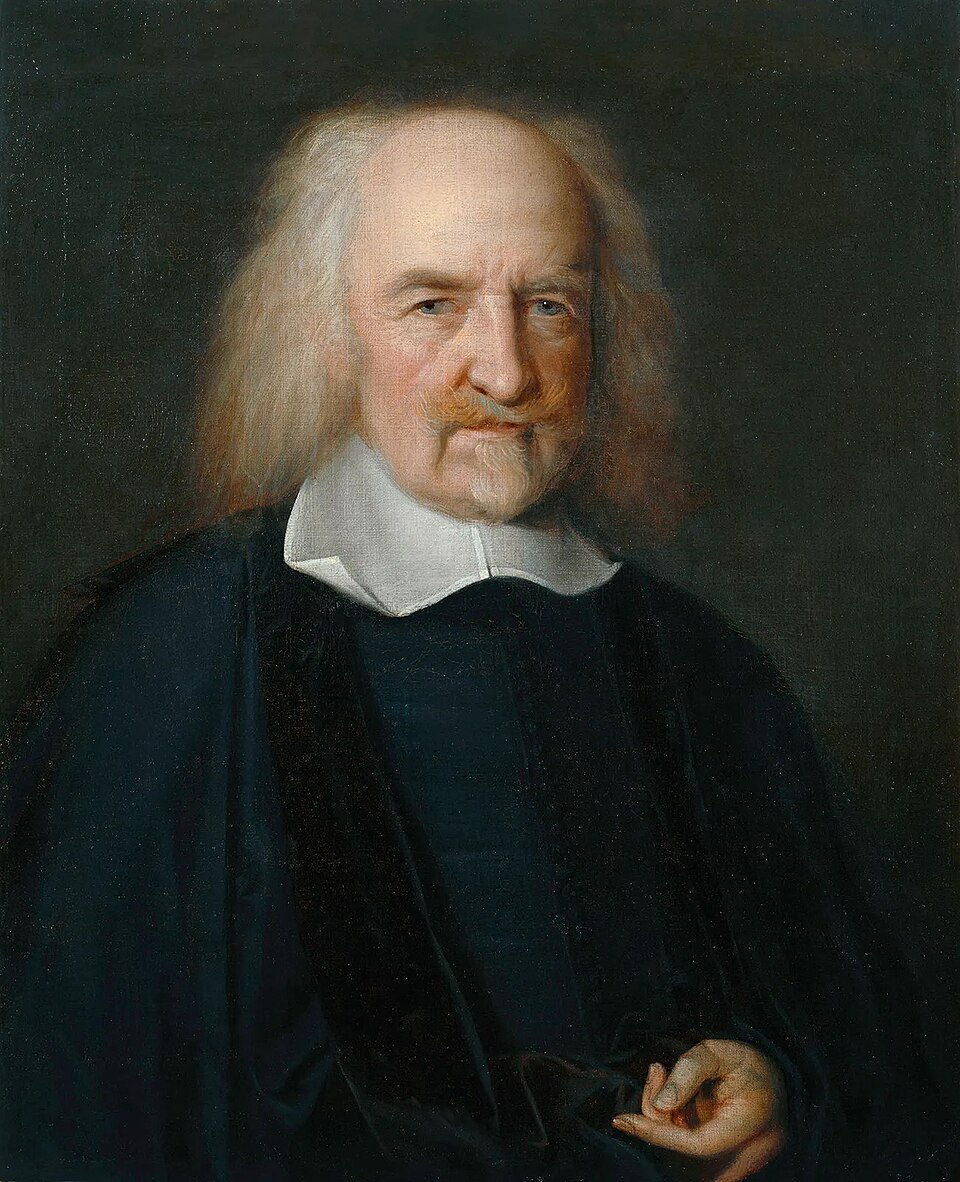
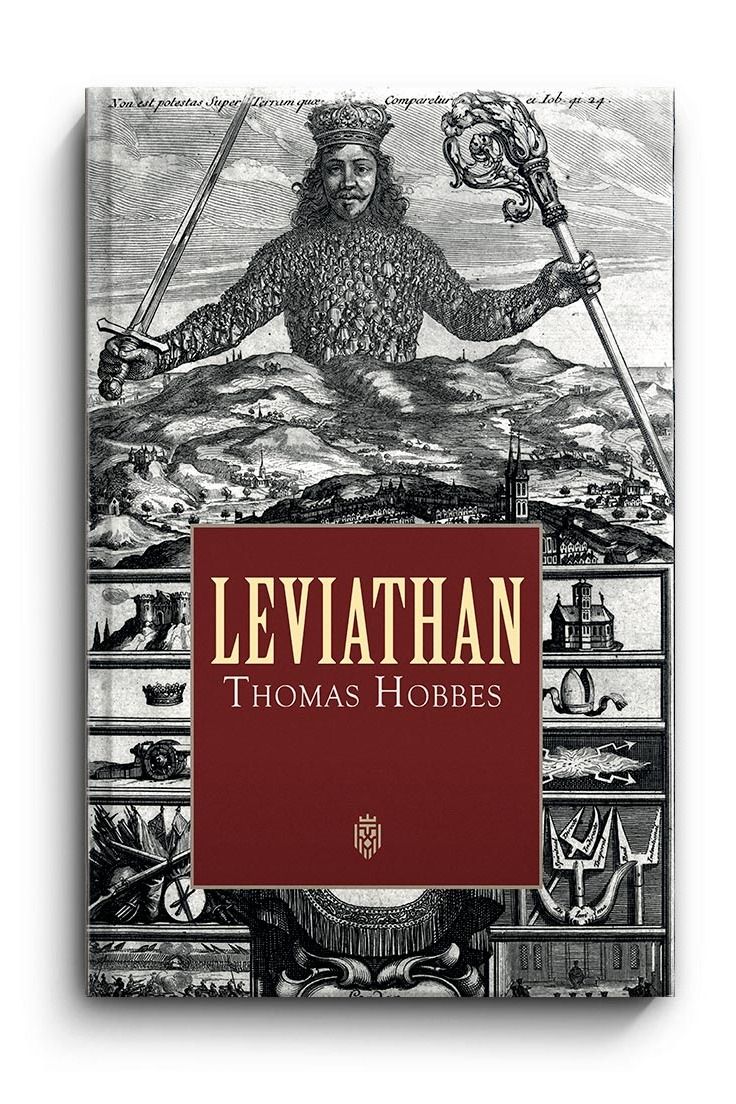
That thought experiment is at the heart of Thomas Hobbes's Leviathan, published in 1651. His question is not simply whether government is useful. It is more fundamental: why should rational people accept political authority at all? His answer begins with fear, but it ends with an argument about peace, authorization, obligation, and the conditions required for social order.
Why Hobbes Feared Political Disorder
Hobbes wrote during a period in which political authority was not an abstract classroom problem. England experienced severe political conflict during the seventeenth century, including the English Civil Wars, the execution of Charles I, and struggles over sovereignty and religion. Hobbes's political thought was deeply concerned with the consequences of divided authority and civil conflict.
This context helps explain the urgency of Leviathan. Hobbes was not merely asking what an ideal constitution would look like. He was asking what happens when people no longer agree about who has the authority to decide public questions. If competing institutions, factions, religious authorities, or individuals each claim a final right to judge, then political disagreement can become a struggle over who gets to command.
The historical setting does not by itself prove Hobbes's theory. But it helps explain why security occupies such a central place in it. For Hobbes, civil peace is not a decorative feature of political life. Without it, the ordinary activities that make a stable society possible become precarious.
The State of Nature: What Happens Without a Common Power?
Hobbes's state of nature is a hypothetical condition in which there is no common authority with enough power to enforce rules and settle disputes. It is not simply a claim that prehistoric humans literally lived in a permanent condition of nonstop combat. The philosophical purpose of the concept is to ask what relations between people would look like if there were no effective political power above them.
The crucial problem is not that every person is constantly violent. Hobbes's argument is about insecurity. If people are sufficiently equal in their ability to threaten one another, if they cannot depend on a common authority, and if each person retains a right to act according to their own judgment of what is necessary for self-preservation, then even peaceful intentions cannot guarantee lasting peace.
This produces what Hobbes calls a condition of war. "War" here includes a standing disposition toward conflict: a situation in which people know that violence may occur but have no reliable institution capable of preventing it. The famous result is the bleak description of life as "solitary, poor, nasty, brutish, and short."
The important philosophical move is therefore this: peace requires more than good intentions. It requires an authority capable of making agreements credible and preventing private disputes from escalating into private warfare.
What You Surrender: Natural Right and Political Freedom
In the state of nature, each person possesses what Hobbes calls a natural right: the liberty to use their own power as they judge necessary for preserving their life. This is an extraordinarily broad freedom because there is no common legal framework limiting what each person may claim or do.
The social contract changes that situation. Individuals authorize a sovereign to act for them in matters of public authority. They no longer retain the same unrestricted political freedom to decide every dispute according to private judgment. The point is precisely to replace a multitude of competing private judgments with a common public judgment.
That is why Hobbes's theory can feel so severe. Modern readers often begin with the assumption that political authority must be limited by individual rights. Hobbes reverses the order of the argument. He first asks what makes political authority possible and why peace is necessary; only then does he ask what liberty remains within the resulting political order.
For Hobbes, freedom within civil society is closely connected to what the law does not forbid. This is very different from the later liberal idea that individuals possess a sphere of rights that government itself must respect.
Why Hobbes Wants an Undivided Sovereign
If political authority is created to end conflict, Hobbes reasons, it cannot work if the authority itself is permanently subject to competing final authorities. A sovereign therefore needs sufficient power to make rules, enforce them, judge disputes, and maintain public peace.
This is the logic behind Hobbes's defense of sovereignty. The sovereign is not merely a powerful administrator. The sovereign is the final public authority within the commonwealth. If another institution can ultimately override the sovereign, then there is a question about which institution has the final right to decide. If competing groups each claim that right, the political problem returns.
Hobbes therefore rejects the idea that subjects may routinely treat political obedience as conditional upon their personal approval. A government that survives only while every citizen agrees with every decision would possess too little authority to settle disagreements in the first place.
This does not mean Hobbes thinks every sovereign is wise, benevolent, or morally admirable. His argument is more institutional than that. The question is whether there is a sufficiently powerful common authority to prevent society from falling back into the insecurity of the state of nature.
Why Obey the Sovereign?
The deeper question is political obligation. Why should a person obey a government when they disagree with it? Hobbes's answer is connected to authorization and self-preservation. Individuals enter political society because they have reason to escape the insecurity of the state of nature, and the authority they create must be strong enough to accomplish that purpose.
Obedience therefore cannot be based merely on affection for a ruler. Nor does Hobbes make the moral character of the sovereign the foundation of political legitimacy. The fundamental justification for political authority is the preservation of peace and security.
This creates a striking asymmetry. Subjects have powerful reasons to obey because political order protects them from the dangers of private conflict. But the sovereign is not simply another contracting party who can be treated like an employee. Hobbes's account of the covenant is structured around individuals authorizing a common representative, rather than around the sovereign making the same contract with each citizen as an equal party.
That is one reason Hobbes's social contract differs sharply from later liberal theories. The contract explains why political authority exists, but it does not establish the same set of constitutional limits that later theorists would place upon government.
Does Hobbes Leave Any Room for Resistance?
It would be too simple to say that Hobbes believes subjects have absolutely no freedom to resist under any circumstances. Self-preservation remains fundamental to his political philosophy. A person cannot be expected to surrender every capacity for self-defense simply because they live under a sovereign.
Hobbes distinguishes between a general right of political rebellion and the individual impulse to preserve one's own life. The first threatens the stability of the commonwealth; the second is built into the very psychology that explains why people left the state of nature.
This creates an important tension within his theory. The sovereign must possess enormous authority to maintain peace, yet the individual cannot completely cease to care about survival. Hobbes's political system is therefore more complicated than the slogan "obey absolutely" suggests.
The distinction also shows why Hobbes remains philosophically interesting. His theory is not simply a celebration of authoritarian power. It is an attempt to derive political authority from a problem that every political system has to address: how can people with competing interests live together without making private violence the final method of resolving disagreement?
Hobbes Versus Locke: Security or Rights?
The easiest way to see what is distinctive about Hobbes is to compare him with John Locke. Both thinkers use the language of a state of nature and a social contract, but they draw substantially different conclusions about government.
Hobbes emphasizes the danger of insecurity and therefore gives the sovereign extensive authority. Locke gives greater weight to natural rights and the idea that political power is held in trust for the protection of those rights. For Locke, government that systematically violates its purpose can lose its legitimacy, and people can have a right to resist or replace it.
| Question | Hobbes | Locke |
|---|---|---|
| Main political problem | Insecurity, conflict, and the absence of a common power | Insecurity and the inadequate protection of natural rights |
| Purpose of government | Peace, security, and the prevention of civil conflict | Protection of natural rights and the public good |
| Sovereignty | Strong and fundamentally undivided | Limited and held in trust |
| Right to resist | No general right to rebel against disliked government | Resistance can be justified when government violates its trust |
| Central trade-off | Liberty is restricted for security | Political power is limited to preserve rights |
The disagreement is therefore not simply "strong government versus weak government." It concerns what the greatest political danger actually is. Hobbes fears the breakdown of common authority; Locke fears the abuse of political authority. The two thinkers identify different failure modes and design their theories accordingly.
Would You Sign Hobbes's Contract Today?
Now return to the original question. Would you sign the contract? If the alternative really were a condition with no courts, no enforceable agreements, no reliable public authority, and a persistent possibility of violent conflict, the bargain becomes harder to dismiss. Security is not a trivial benefit. Without some degree of security, rights and freedoms can become difficult to exercise in practice.
But modern constitutional government changes the comparison. Many contemporary states attempt to combine public security with constitutional limits, elections, judicial institutions, individual rights, and mechanisms for changing governments. That arrangement would look very different from Hobbes's sovereign authority.
This is where Hobbes's thought experiment remains useful. He forces us to ask what we expect political institutions to provide before we complain about the restrictions they impose. How much authority is necessary to maintain public order? When does security become domination? Can a state preserve peace without concentrating too much power? And what should happen when the government itself becomes the source of insecurity?
These questions belong to political philosophy, but they are not confined to philosophy departments. They appear whenever societies debate policing, emergency powers, surveillance, civil liberties, constitutional limits, public safety, or the relationship between individual freedom and collective security.
Hobbes does not give us an easy answer. He gives us an uncomfortable starting point: freedom is not meaningful if people cannot live securely enough to exercise it. His critics respond with an equally uncomfortable warning: security is not enough if the authority providing it becomes powerful enough to destroy the freedom it was supposed to protect.
The Real Question Behind the Contract
The most interesting part of Hobbes's social contract is therefore not whether we personally like absolute sovereignty. It is the structure of the dilemma. Political life requires some common rules and some authority capable of enforcing them, but every increase in political power raises the possibility of abuse.
Hobbes begins from the fear of anarchy. Later liberal thinkers increasingly emphasized the fear of tyranny. Modern constitutionalism can be understood, in part, as an attempt to take both fears seriously: preserve enough authority to maintain order while constructing institutions capable of restraining authority itself.
So perhaps the question is not simply, "Would you sign Hobbes's contract?" The more revealing question is: what would you be willing to surrender for security, and what would you refuse to surrender even for peace?
Frequently Asked Questions
What is Hobbes's social contract?
Hobbes's social contract is the political arrangement through which individuals authorize a common sovereign to act for the sake of peace and security. People surrender much of the freedom they would possess without political authority in exchange for protection from the insecurity of the state of nature.
What is Hobbes's state of nature?
It is a hypothetical condition without a common political power capable of enforcing rules and settling disputes. Because individuals retain broad freedom to act according to their own judgment, conflict and insecurity remain persistent possibilities.
Why does Hobbes defend absolute sovereignty?
Hobbes argues that the authority created to prevent conflict must be strong enough to settle disputes and enforce public rules. If another authority could ultimately override the sovereign, disputes over who has final authority could recreate political instability.
Does Hobbes think people have any rights after entering political society?
Hobbes sharply restricts political freedom under sovereignty, but self-preservation remains fundamental. His theory therefore does not require a person simply to will their own destruction in every circumstance.
Can people resist Hobbes's sovereign?
Hobbes rejects a general right to rebel whenever subjects disapprove of government decisions. However, his account leaves room for resistance connected to the individual's continuing concern with self-preservation.
How does Locke differ from Hobbes?
Locke also uses a social-contract framework but gives greater importance to natural rights and limited government. He argues that government exists to protect those rights and that people can resist a government that systematically violates its political trust.